Written works, music, videos, and other content on the Internet are easily accessible to the general public, but is it considered ethically permissible to access, copy, and redistribute them? Is it right to look at someone else's documents on a home or school computer just because they are not protected by password? Are there ethical problems with using a false identity in an Internet chat room, or behaving in a way that one would not consider acting in the "real" world? What about using a photograph from the Internet in a research paper without giving credit to the photographer, even if using that photo constitutes fair use and does not violate the law? Computer Ethics explores these questions and more, enabling students to differentiate between what is legally permissible and what is ethical in the context of computers and the Internet.
Chapters include:
-Privacy: Does It Exist Online?
-Security: Challenges in the Information Society
-Anonymity: Advantages and Dangers of Anonymous Communication
-Virtual Worlds: Living Inside Your Computer
-Professional Ethics: When Is the Programmer Responsible?
-Copying: Does Ease of Copying Make It Right?
-Speech: The Internet as Library, Newspaper, Television, and Beyond
-Netiquette: Adding Formality to an Informal Medium.
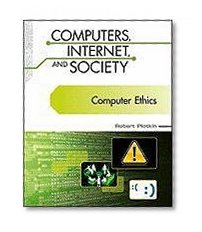
Computer Ethics (Computers, Internet, and Society)
📄 Viewing lite version
Full site ›
Book Details
Author(s)Robert Plotkin
PublisherFacts on File, Inc.
ISBN / ASIN081607755X
ISBN-139780816077557
AvailabilityUsually ships in 24 hours
Sales Rank1,387,143
MarketplaceUnited States 🇺🇸