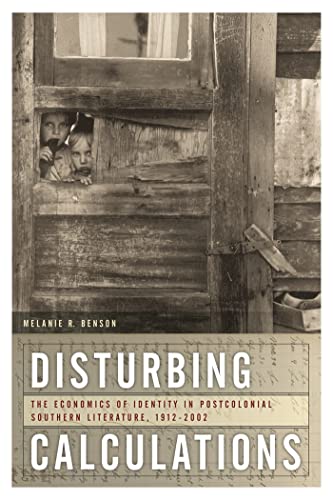
In Thomas Wolfe's Look Homeward, Angel, Margaret Leonard says, "Never mind about algebra here. That s for poor folks. There s no need for algebra where two and two make five." Moments of mathematical reckoning like this pervade twentieth-century southern literature, says Melanie R. Benson. In fiction by a large, diverse group of authors, including William Faulkner, Anita Loos, William Attaway, Dorothy Allison, and Lan Cao, Benson identifies a calculation-obsessed, anxiety-ridden discourse in which numbers are employed to determine social and racial hierarchies and establish individual worth and identity.
This "narcissistic fetish of number" speaks to a tangle of desires and denials rooted in the history of the South, capitalism, and colonialism. No one evades participation in these "disturbing equations," says Benson, wherein longing for increase, accumulation, and superiority collides with repudiation of the means by which material wealth is attained. Writers from marginalized groups--including African Americans, Native Americans, women, immigrants, and the poor--have deeply internalized and co-opted methods and tropes of the master narrative even as they have struggled to wield new voices unmarked by the discourse of the colonizer.
Having nominally emerged from slavery's legacy, the South is now situated in the agonized space between free market capitalism and social progressivism. Elite southerners work to distance themselves from capitalism's dehumanizing mechanisms, while the marginalized yearn to realize the uniquely American narrative of accumulation and ascent. The fetish of numbers emerges to signify the futility of both.
A volume in the series The New Southern Studies