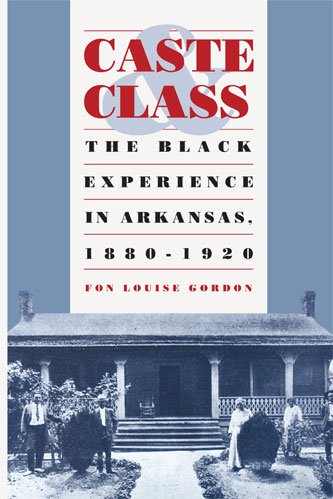
Through individual profiles and numerous examples, Gordon shows how class within the black community was determined by skin color, family background, and education in combination with such indicators of status as occupation and religious affiliation. At the same time,
Caste and Class tells two concurrent and closely linked stories. One story is of the rise, growing self-absorption, and finally flagging influence of Arkansas's first black middle and upper classes. Primarily urban, professional, and conservative, these elites were relatively insulated from white oppression and supported the conciliatory race policies of Booker T. Washington. The other story Gordon tells is of the long, arduous emergence of the working classes, which was brought on in part by an exposure to a wider range of opportunities during and after World War I and the birth of the New Negro Movement. Overwhelmingly rural, these blacks were isolated from black middle-class culture and values and were oriented toward agitation and protest.
In general, Gordon shows, the upper classes sought stability and prosperity apart from the white power structure, while the lower classes sought to improve their lives in spite of it. Within the context of national trends and events, Gordon discusses such topics as the myth and reality of Arkansas as a promised land of racial tolerance, the antebellum roots of black stratified society, the formation of Arkansas's all-black communities, and the emigration of the lower classes to Africa and the industrial North and Midwest.
Caste and Class moves beyond monolithic views of white oppression and black victimization to portray African American community-building in the era that saw the collapse of agriculture as the dominant way of life for African Americans.