East Asia has experienced the fastest economic growth in the world over the last three decades, accompanied by a 10-fold gross domestic product increase and rapid urbanization. Energy consumption has more than tripled during this period and is expected to double over the next 20 years. This remarkable trend has led to twin energy challenges in the region―environmental sustainability and energy security. Written for an audience of energy policy makers and practitioners, Winds of Change explores the region’s energy future over the next two decades through two energy scenarios. It outlines the strategic direction East Asia’s energy sector must take to meet its growing energy demand in an environmentally sustainable manner, and presents a pathway of policy frameworks and financing mechanisms to get there.
The six East Asian countries―China, Indonesia, Malaysia, the Philippines, Thailand, and Vietnam―examined in this book could, with the right policies and financing, stabilize CO2 emissions by 2025, improve their local environment, and enhance energy security without compromising economic growth. They must move their energy sectors toward much higher efficiency and more widespread use of low-carbon technologies, while obtaining substantial financing and low-carbon technologies from developed countries. This clean energy revolution requires major policy and institutional reforms, including energy pricing reforms, regulations such as energy efficiency standards, financial incentives such as feed-in tariffs for renewable energy, and accelerated research and development. Finally, building low-carbon cities will be key to containing the rapid urban energy growth through compact urban design, public transport, clean vehicles, and green buildings.
The window of opportunity is closing fast―delaying action would lock the region into a longlasting high-carbon infrastructure. The technical and policy means exist for such transformational changes, but only strong political will and unprecedented international cooperation will make them happen.
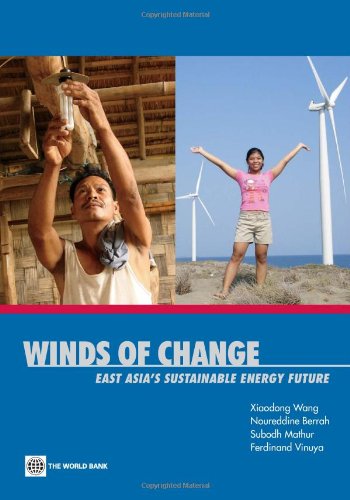
Winds of Change: East Asia's Sustainable Energy Future (World Bank Publications)
📄 Viewing lite version
Full site ›
⌛ 🇫🇷 France pricing being fetched…
Prices will appear once fetched — usually within a few minutes.
View in:
🇺🇸 USA
Book Details
PublisherWorld Bank Publications
ISBN / ASIN0821384864
ISBN-139780821384862
CategoryBusiness & Economics
MarketplaceFrance 🇫🇷
Description ▲
More Books in Business & Economics
Business Cycles and Forecasting
View
Development Economics: Its Position in the Present Sta…
View
Cost Systems Design
View
So You Want to Dance on Broadway
View
The Blueprint: Reviving Innovation, Rediscovering Risk…
View
Managing IT Outsourcing, Second Edition
View
Education and the Creation of Capital in the Early Ame…
View
Global Corruption Report 2005: Special Focus: Corrupti…
View
More Tales for Trainers: Using Stories and Metaphors t…
View