Reading texts by John Adams, Thomas Paine, Harriet Beecher Stowe, Augusta J. Evans, Mark Twain, Pauline Hopkins, William James, José Martí, W. E. B. Du Bois, and others, Levander traces the child as it figures in writing about several defining events for the United States. Among these are the Revolutionary War, the U.S.-Mexican War, the Civil War, and the U.S. expulsion of Spain from the Caribbean and Cuba. She charts how the child crystallized the concept of self—a self who could affiliate with the nation—in the early national period, and then follows the child through the rise of a school of American psychology and the period of imperialism. Demonstrating that textual representations of the child have been a potent force in shaping public opinion about race, slavery, exceptionalism, and imperialism, Cradle of Liberty shows how a powerful racial logic pervades structures of liberal democracy in the United States.
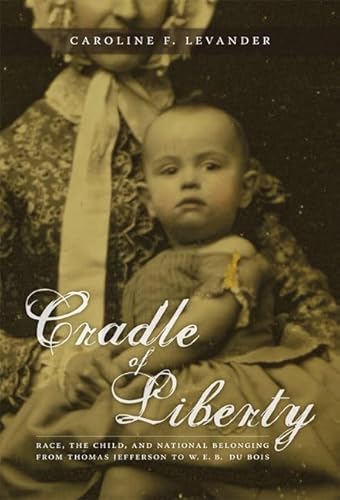
Cradle of Liberty: Race, the Child, and National Belonging from Thomas Jefferson to W. E. B. Du Bois (New Americanists)
📄 Viewing lite version
Full site ›
Book Details
Author(s)Caroline Levander
PublisherDuke University Press Books
ISBN / ASIN0822338726
ISBN-139780822338727
AvailabilityUsually ships in 24 hours
Sales Rank827,590
CategoryHistory
MarketplaceUnited States 🇺🇸
Description ▲
Throughout American literature, the figure of the child is often represented in opposition to the adult. In Cradle of Liberty Caroline F. Levander proposes that this opposition is crucial to American political thought and the literary cultures that surround and help produce it. Levander argues that from the late eighteenth century through the early twentieth, American literary and political texts did more than include child subjects: they depended on them to represent, naturalize, and, at times, attempt to reconfigure the ground rules of U.S. national belonging. She demonstrates how, as the modern nation-state and the modern concept of the child (as someone fundamentally different from the adult) emerged in tandem from the late eighteenth century forward, the child and the nation-state became intertwined. The child came to represent nationalism, nation-building, and the intrinsic connection between nationalism and race that was instrumental in creating a culture of white supremacy in the United States.
More Books in History
The Bet, and Other Stories
View
Pakistan and the Bomb: Public Opinion and Nuclear Opti…
View
Writing National Histories: Western Europe Since 1800
View
Empire in Eclipse
View
Monks and Laymen in Byzantium, 843-1118
View
The Wilmington and Western Railroad (Images of Rail: D…
View
Black Sailor, White Navy: Racial Unrest in the Fleet d…
View
Feasibility of Laser Power Transmission to a High-Alti…
View
The Democratic Republic: 1801-1815
View