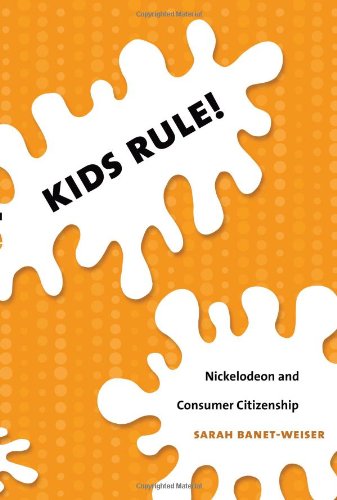
Banet-Weiser draws on interviews with nearly fifty children as well as with network professionals; coverage of Nickelodeon in both trade and mass media publications; and analysis of the network’s programs. She provides an overview of the media industry within which Nickelodeon emerged in the early 1980s as well as a detailed investigation of its brand-development strategies. She also explores Nickelodeon’s commitment to “girl power,†its ambivalent stance on multiculturalism and diversity, and its oft-remarked appeal to adult viewers. Banet-Weiser does not condemn commercial culture nor dismiss the opportunities for community and belonging it can facilitate. Rather she contends that in the contemporary media environment, the discourses of political citizenship and commercial citizenship so thoroughly inform one another that they must be analyzed in tandem. Together they play a fundamental role in structuring children’s interactions with television.
Kids Rule!: Nickelodeon and Consumer Citizenship (Console-ing Passions)
📄 Viewing lite version
Full site ›
Book Details
Author(s)Sarah Banet-Weiser
PublisherDuke University Press Books
ISBN / ASIN0822339935
ISBN-139780822339939
AvailabilityUsually ships in 24 hours
Sales Rank695,317
MarketplaceUnited States 🇺🇸
Description ▲
In Kids Rule! Sarah Banet-Weiser examines the cable network Nickelodeon in order to rethink the relationship between children, media, citizenship, and consumerism. Nickelodeon is arguably the most commercially successful cable network ever. Broadcasting original programs such as Dora the Explorer, SpongeBob SquarePants, and Rugrats (and producing related movies, Web sites, and merchandise), Nickelodeon has worked aggressively to claim and maintain its position as the preeminent creator and distributor of television programs for America’s young children, tweens, and teens. Banet-Weiser argues that a key to its success is its construction of children as citizens within a commercial context. The network’s self-conscious engagement with kids—its creation of a “Nickelodeon Nation†offering choices and empowerment within a world structured by rigid adult rules—combines an appeal to kids’ formidable purchasing power with assertions of their political and cultural power.