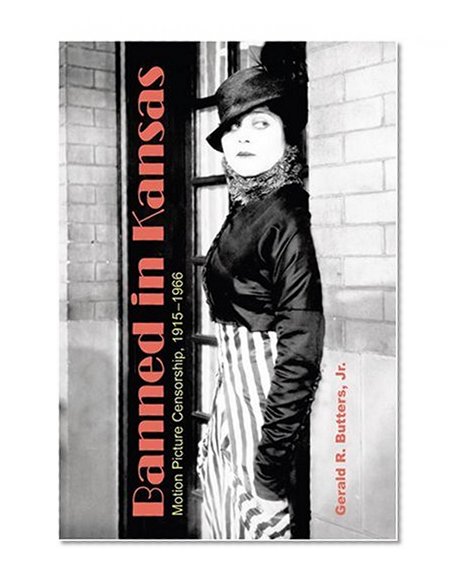
          If you caught a movie in Kansas through much of the past century, you’re likely to have seen a different version than did the rest of America. Theda Bara’s depictions of wicked sexuality were off-limits, and a film such as the 1932 Scarface showed far too much violence for decent folk—a threat to Protestant culture and to the morals of the general population.
           In 1915, Kansas became one of only a handful of states to establish its own film censorship board. The Kansas board controlled screen content in the state for more than fifty years, yet little is known about its activities. This first book-length study of state film censorship examines the unique political, social, and economic factors that led to its implementation in Kansas, examining why censorship legislation was enacted, what the attitudes of Kansans were toward censorship, and why it lasted for half a century.
Cinema historian Gerald Butters places the Kansas Board of Review’s attempts to control screen content in the context of nationwide censorship efforts during the early part of the twentieth century. He tells how factors such as Progressivism, concern over child rearing, and a supportive press contributed to censorship, and he traces the board’s history from the problems posed by the emergence of “talkies†through changing sexual mores in the 1920s to challenges to its power in the 1950s.
In addition to revealing the fine points of film content deemed too sensitive for screening, Butters describes the daily operations of the board, illustrating the difficulties it encountered as it wrestled not only with constantly shifting definitions of morality but also with the vagaries of the political and legal systems. Stills from motion pictures illustrate the type of screen content the board attempted to censor.
           As Kansas faced the march of modernity, even state politicians began to criticize film censorship, and Butters tells how by the 1960s the board was fighting to remain relevant as film companies increasingly challenged its attempts to control screen content. Banned in Kansas weaves a fascinating tale of the enforcement of public morality, making it a definitive study for cinema scholars and an entertaining read for film buffs.
Â