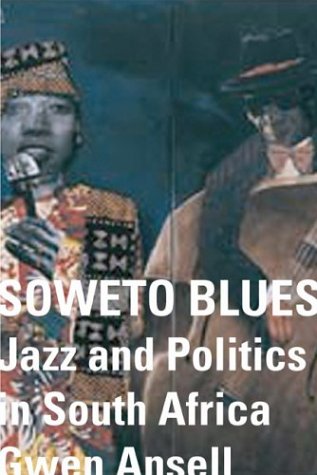
Soweto Blues: Jazz, Popular Music, and Politics in South Africa
📄 Viewing lite version
Full site ›
Book Details
Author(s)Gwen Ansell
PublisherBloomsbury Academic
ISBN / ASIN0826416624
ISBN-139780826416629
AvailabilityUsually ships in 24 hours
Sales Rank2,942,359
CategoryMusic
MarketplaceUnited States 🇺🇸
Description ▲
A major new contribution to the study of African music, Soweto Blues tells the remarkable story of how jazz became a key part of South Africa's struggles in the 20th Century, and provides a fascinating overview of the ongoing links between African and American styles of music. Ansell illustrates how jazz occupies a unique place in South African music. Through interviews with hundreds of musicians, she pieces together a vibrant narrative history, bringing to life the early politics of resistance, the atmosphere of illegal performance spaces, the global anti-apartheid influence of Hugh Masekela and Miriam Makeba, as well as the post-apartheid upheavals in the national broadcasting and recording industries. Featuring an introduction by Abdullah Ibrahim, Soweto Blues is a fitting tribute to the power of music to inspire optimism and self-expression in the darkest of times. <br/><br/>FROM THE INTRODUCTION<br/>"This book tells of the journeys—in both directions—between village and city, between saxophone and cellphone, between Langa and Cape Town, between America and Africa that, over the past century, have created the unique sound dubbed ‘South African Jazz'. The term itself is contentious. As in America, some politically-aware South African players dislike the term for its social connotations. ‘The term jazz was used to describe the music of brothels. It was simply another way of denigrating the creativity of African musicians,' says percussionist and composer Ndikho Xaba. And, as in the rest of the world, many musical explorers resent the constraints of an externally defined musical box. <br/>In South Africa, apartheid overlaid the word with other, more sinister connotations. In some critical and ethno-musicological contexts, the music was evaluated by the degree of its American-ness and denigrated as impure when it employed African idioms in composition or playing. Also under apartheid, the white authorities found it unacceptable that black musicians should be acknowledged as capable of playing such ‘sophisticated' music. And so symbolic annihilation became part of the hegemonic staging and broadcasting of jazz. Playing behind a screen at Cape Town City Hall while a white musician mimed his notes, reedman Winston Mankunku Ngozi was billed as Winston Mann. In radio broadcasts, pianist Tony Schilder heard himself re-christened Peter Evans, and trumpeter Johnny Mekoa became Johnny Keen.">
More Books in Music
The Decca Hillbilly Discography, 1927-1945 (Discograph…
View
Progressive Bass
View
M401 - Rhythm Vocabulary Charts for Effective Rythmic …
View
Billy Joel - Greatest Hits, Volumes 1 and 2 Piano, Voc…
View
Patricia Morris The Piccolo Study Book | Essential Stu…
View
4-Way Coordination: A Method Book for the Development …
View
Harry Potter Instrumental Solos (Movies 1-5): Alto Sax…
View
Selected Studies - Saxophone Sheet Music | Advanced Et…
View