Search Books
Body Language in Literature…

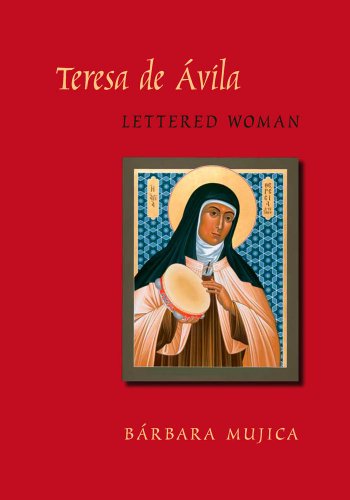
Teresa de Avila, Lettered Woman

Author Barbara Mujica
Publisher Vanderbilt University Press
Category Literary Criticism
📄 Viewing lite version Full site ›
🌎 Shop on Amazon — choose country
40.50 45.00 USD
🛒 Buy New on Amazon 🇺🇸 🏷 Buy Used — $34.48

✓ Usually ships in 24 hours

Share:
Book Details
ISBN / ASIN0826516319
ISBN-139780826516312
AvailabilityUsually ships in 24 hours
Sales Rank2,466,873
MarketplaceUnited States 🇺🇸

Description

In 1562, Teresa de Avila founded the Discalced Carmelites and launched a reform movement that would pit her against the Church hierarchy and the male officials of her own religious order. This new spirituality, which stressed interiority and a personal relationship with God, was considered dangerous and subversive. It provoked the suspicion of the Inquisition and the wrath of unreformed Carmelites, especially the Andalusian friars, who favored the lax practices of their traditional monasteries. The Inquisition investigated Teresa repeatedly, and the Carmelite General had her detained. But even during the most terrible periods of persecution, Teresa continued to fight for the reform using the weapon she wielded best: the pen. Teresa wrote hundreds, perhaps thousands, of letters to everyone from the King to prelates to mothers of novices.

Teresa's epistolary writing reveals how she used her political acumen to dodge inquisitors and negotiate the thorny issues of the reform, facing off the authorities--albeit with considerable tact--and reprimanding priests and nuns who failed to follow her orders. Her letters bring to light the different strategies she used--code names, secret routing--in order to communicate with nuns and male allies. They show how she manipulated language, varying her tone and rhetoric according to the recipient or slipping into deliberate vagueness in order to avoid divulging secrets. What emerges from her correspondence is a portrait of extraordinary courage, ability, and shrewdness.

In the sixteenth century, the word letrado (lettered) referred to the learned men of the Church. Teresa treated letrados with great respect and always insisted on her own lack of learning. The irony is that although women could not be letradas, Teresa was, as her correspondence shows, "lettered" in more ways than one.

Egyptian Literature
View
Utopia Paraiso E Historia: Inscripciones Del Mito En G…
View
Nation, State, and Empire in English Renaissance Lite…
View
On the Outskirts of Form: Practicing Cultural Poetics
View
Genre at the Crossroads: The Challenge of Fantasy
View
Profiles in Canadian Drama: James Reaney
View
Monty Python, Shakespeare and English Renaissance Drama
View
Modes of Faith: Secular Surrogates for Lost Religious …
View
Latino Los Angeles in Film and Fiction: The Cultural P…
View