- the history and mission of libraries, from past to present;
- digital devices, social networking, and other technology;
- the impact of digital publishing on the publishing industry and the effects of eBooks on libraries
- values and ethics of the profession;
- how library services have evolved in the areas of virtual reference, embedded librarianship, digital access and repositories, digital preservation, and civic engagement;
- new and ongoing efforts to organize knowledge, such as FRBR, RDA: Resource Description and Access, BIBFRAME, the Semantic Web, and the Next Generation Catalog (Catalog 2.0);
- the significance of the digital divide and policy issues related to broadband access and network neutrality;
- the concept of intellectual freedom, and how it plays out in the real world;
- legal developments like new interpretations of copyright related to mass digitization of books (Google Books) and scholarly articles;
- the continuing tensions in LIS education between information science and library science; and
- initiatives to integrate libraries, archives, and museums (LAMs)
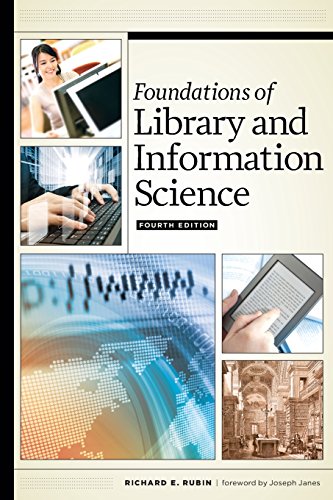
Foundations of Library and Information Science
📄 Viewing lite version
Full site ›
Book Details
Author(s)Richard E. Rubin
PublisherNeal-Schuman Publishers
ISBN / ASIN0838913709
ISBN-139780838913703
AvailabilityUsually ships in 24 hours
Sales Rank405,711
CategoryLanguage Arts & Disciplines
MarketplaceUnited States 🇺🇸
Description ▲
Much has happened since the last edition of this benchmark text was published. Today's LIS professionals are experiencing both excitement and trepidation as sweeping societal, technological, political, and economic changes affect our users and institutions and transform our discipline. We are increasingly part of a sophisticated infrastructure: the boundaries of knowledge creation, acquisition, organization, dissemination, use, and evaluation are rapidly blurring, creating new challenges. Similarly, we are also part of a changing environment: an aging population, a ubiquitous and evolving internet, the proliferation of social media and mobile devices, significant financial stresses on public institutions, and changing information policies affecting creators and distributors of knowledge. The profession demands constant growth, continuous learning, and open minds, and the new edition of Rubin's book offers a firm foundation of knowledge and guidance for LIS students and professionals alike. Responding to the many changes occurring both in the field and in society at large, this text includes comprehensive coverage of
More Books in Language Arts & Disciplines
The Quest for Charisma: Christianity and Persuasion
View
Read the Way You Talk: A Guide for Lectors
View
Focus on the Caribbean (Varieties of English Around th…
View
How to Write a Novel; A Practical Guide to the Art of …
View
How to Write and Sell Mystery Fiction
View
Politically Speaking: A Worldwide Examination of Langu…
View
The Memoir Book
View
The Subjunctive in the Age of Prescriptivism: English …
View
Invisible Acts of Power: Channeling Grace in Your Ever…
View