A practical guide for the identification and management of a range of hazardous wastes, Waste Management Practices: Municipal, Hazardous, and Industrial integrates technical information including chemistry, microbiology, and engineering, with current regulations. Emphasizing basic environmental science and related technical fields, the book is an introductory manual for waste management as mandated by Resource Conservation and Recovery Act and related statutes.
The first section of the book provides an overview of the historical and regulatory development of waste management. The second section delineates the management of municipal solid waste and includes coverage of conventional (e.g. sanitary landfill, aerobic composting) and innovative (bioreactor landfill, high-solids anaerobic digestion) technologies. The third section addresses hazardous wastes and their management, including identification, transportation, and requirements for generators and for treatment, storage, and disposal facilities. Disposition via incineration, chemical treatment, and land disposal are covered. The final section explores special categories of waste that often cannot find a regulatory "home" under either RCRA Subtitle D (Solid Wastes) or Subtitle C (Hazardous Wastes). Example waste types include used oil, construction and demolition debris, and electronics waste.
The garbage crisis, as it became known in the late 1980s, will not go away as long as humans continue to produce materials that nature does not possess the capability to decompose. Yet there are few, if any, references that collectively and comprehensively address the management of household, industrial, commercial, and hazardous wastes. Filling this need, Waste Management Practices focuses on the entire spectrum of wastes and their management.
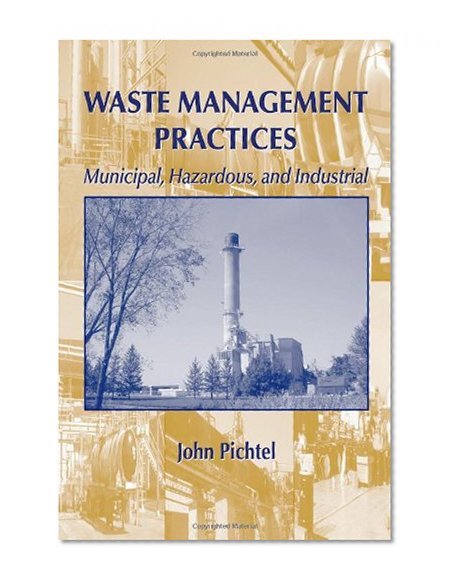
Waste Management Practices: Municipal, Hazardous, and Industrial
📄 Viewing lite version
Full site ›
Book Details
Author(s)John Pichtel
PublisherCRC Press
ISBN / ASIN0849335256
ISBN-139780849335259
Sales Rank340,192
MarketplaceUnited States 🇺🇸