In the era of mass incarceration, over 600,000 people are released from federal or state prison each year, with many returning to chaotic living environments rife with violence. In these circumstances, how do former prisoners navigate reentering society? In Homeward, sociologist Bruce Western examines the tumultuous first year after release from prison. Drawing from in-depth interviews with over one hundred individuals, he describes the lives of the formerly incarcerated and demonstrates how poverty, racial inequality, and failures of social support trap many in a cycle of vulnerability despite their efforts to rejoin society.
Western and his research team conducted comprehensive interviews with men and women released from the Massachusetts state prison system who returned to neighborhoods around Boston. Western finds that for most, leaving prison is associated with acute material hardship. In the first year after prison, most respondents could not afford their own housing and relied on family support and government programs, with half living in deep poverty. Many struggled with chronic pain, mental illnesses, or addiction—the most important predictor of recidivism. Most respondents were also unemployed. Some older white men found union jobs in the construction industry through their social networks, but many others, particularly those who were black or Latino, were unable to obtain full-time work due to few social connections to good jobs, discrimination, and lack of credentials. Violence was common in their lives, and often preceded their incarceration. In contrast to the stereotype of tough criminals preying upon helpless citizens, Western shows that many former prisoners were themselves subject to lifetimes of violence and abuse and encountered more violence after leaving prison, blurring the line between victims and perpetrators.
Western concludes that boosting the social integration of former prisoners is key to both ameliorating deep disadvantage and strengthening public safety. He advocates policies that increase assistance to those in their first year after prison, including guaranteed housing and health care, drug treatment, and transitional employment. By foregrounding the stories of people struggling against the odds to exit the criminal justice system, Homeward shows how overhauling the process of prisoner reentry and rethinking the foundations of justice policy could address the harms of mass incarceration.
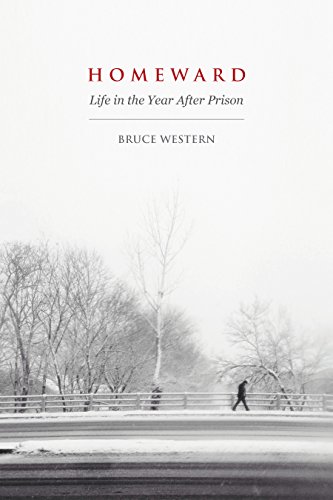
Homeward: Life in the Year After Prison
📄 Viewing lite version
Full site ›
Book Details
Author(s)Western, Bruce
PublisherRussell Sage Foundation
ISBN / ASIN0871549557
ISBN-139780871549556
AvailabilityIn Stock
Sales Rank187
CategoryPaperback
MarketplaceUnited States 🇺🇸
Description ▲
Similar Products ▼
- Locked In: The True Causes of Mass Incarceration-and How to Achieve Real Reform
- Until We Reckon: Violence, Mass Incarceration, and a Road to Repair
- Crook County: Racism and Injustice in America's Largest Criminal Court
- Misdemeanorland: Criminal Courts and Social Control in an Age of Broken Windows Policing
- The Society of Captives: A Study of a Maximum Security Prison (Princeton Classic Editions)
- Locking Up Our Own: Crime and Punishment in Black America
- Holding On: Family and Fatherhood during Incarceration and Reentry
- Punishment Without Crime: How Our Massive Misdemeanor System Traps the Innocent and Makes America More Unequal
- Uneasy Peace: The Great Crime Decline, the Renewal of City Life, and the Next War on Violence
- Caught: The Prison State and the Lockdown of American Politics