Visualizing Biological Structures and Molecules
📄 Viewing lite version
Full site ›
Book Details
Author(s)Thomas E. Creighton
PublisherHelvetian Press
ISBN / ASIN095647814X
ISBN-139780956478146
AvailabilityUsually ships in 24 hours
Sales Rank3,594,623
MarketplaceUnited States 🇺🇸
Description ▲
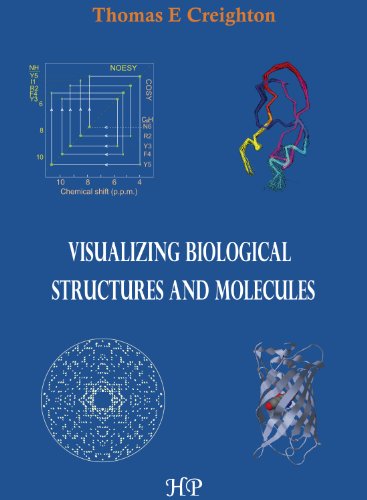
The subject of molecular biology continues to be the most exciting and dynamic area of science and is predicted to dominate the 21st century. Only by investigating biological phenomena at the molecular level is it possible to understand them in detail. Most important are the structures of the biological organs and molecules, which determine how they function. For example, the double-helical structure of DNA immediately suggested how the genetic material is replicated and expressed, providing the foundation for the subject of molecular biology. Most methods for visualizing biological structures depend upon them interacting with radiation: light, X-rays, electrons or neutrons. The phenomenon of scattering of such radiation is described in the first chapter. The second chapter describes microscopy briefly, including transmission, bright-field, dark-field, phase-contrast, polarization, differential interference-contrast, fluorescence, confocal, and near-field scanning optical microscopies; electron microscopy (transmission, scanning, cryoelectron, and freeze-fracture); single-particle reconstruction and electron tomography; scanning probes (atomic force, scanning tunneling, and magnetic force microscopies); and manipulating individual molecules. The third chapter describes X-ray crystallography briefly using optical transforms to illustrate the principles, including crystallization of macromolecules, reciprocal space, the diffraction pattern, the phase problem, isomorphous replacement, molecular replacement, anomalous dispersion, multiple-wavelength anomalous dispersion (MAD), the temperature factor, the electron density map, R-factor, solvent flattening, molecular averaging, noncrystallographic symmetry, difference Fourier, Laue diffraction, neutron diffraction, fiber diffraction, and electron crystallography with 2-D crystals. The fourth chapter describes nuclear magnetic resonance (NMR) to determine the structures of proteins and nucleic acids: the chemical shift, scalar coupling, J-coupling, magnetization transfer, multi-dimensional spectra, isotope editing, and solid-state NMR; COSY, TOCSY, ROESY and NOESY spectra; sequential assignments and residual dipolar couplings; distance geometry and simulated annealing; and mathematical procedures for refining structures: molecular mechanics and energy minimization, molecular and Browning dynamics, normal modes, Monte Carlo calculations, statistical mechanical averaging, thermodynamic cycles, and free energy perturbation methods. These four chapters were taken from the larger volume The Physical and Chemical Basis of Molecular Biology (2010, Helvetian Press, ISBN 978-0-9564781-0-8).