Just as contemporary economics failed to predict the 2008-09 crash, and
over-estimated the subsequent brief recovery that followed, economists
today are again failing to accurately forecast the slowing global economic
growth, the growing fragility, and therefore rising instability in the global
economy.
This book offers a new approach to explaining why mainstream economic
analyses have repeatedly failed and why fiscal and monetary policies have
been incapable of producing a sustained recovery.
Expanding upon the early contributions of Keynes, Minsky and others, it
offers an alternative explanation why the global economy is slowing long
term and becoming more unstable, why policies to date have largely failed,
and why the next crisis may therefore prove even worse than that of 2008-
09.
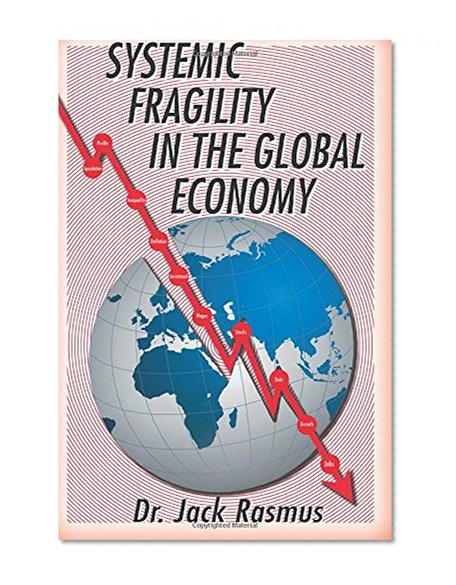
Systemic fragility is rooted in 9 key empirical trends: slowing real
investment; a drift toward deflation; money, credit and liquidity explosion;
rising levels of global debt; a shift to speculative financial investing; the
restructuring of financial markets to reward capital incomes; the restricting
of labor markets to lower wage incomes; the failure of Central Bank
monetary policies; and the ineffectiveness of fiscal policies.
It results from financial, consumer, and government balance sheet
fragilities exacerbating each other -- creating a massive centripetal force
disaggregating and tearing apart the whole, untamable by either fiscal or
monetary means.
This book clarifies how the price system in general, and financial asset
prices in particular, transform into fundamentally destabilizing forces under
conditions of systemic fragility. It explains why the global system has in
recent decades become dependent upon, and even addicted to, massive
liquidity injections, and how fiscal policies have been counterproductive,
exacerbating fragility and instability.
Policymakers’ failure to come to grips with how fundamental changes in the
structure of the 21st century global capitalist economy―in particular in
financial and labor market structures―make the global economy more
systemically fragile can only propel it toward deeper instability and crises.
An appendix describes three simultaneous equations that express in
notational form the variables associated with the Theory of Systemic
Fragility.
Systemic Fragility in the Global Economy
📄 Viewing lite version
Full site ›
Book Details
Author(s)Dr. Jack Rasmus
PublisherClarity Press
ISBN / ASIN0986076945
ISBN-139780986076947
AvailabilityUsually ships in 24 hours
Sales Rank640,599
CategoryBusiness & Economics
MarketplaceUnited States 🇺🇸
Description ▲
More Books in Business & Economics
Business Cycles and Forecasting
View
Development Economics: Its Position in the Present Sta…
View
Cost Systems Design
View
So You Want to Dance on Broadway
View
The Blueprint: Reviving Innovation, Rediscovering Risk…
View
Managing IT Outsourcing, Second Edition
View
Education and the Creation of Capital in the Early Ame…
View
Global Corruption Report 2005: Special Focus: Corrupti…
View
More Tales for Trainers: Using Stories and Metaphors t…
View