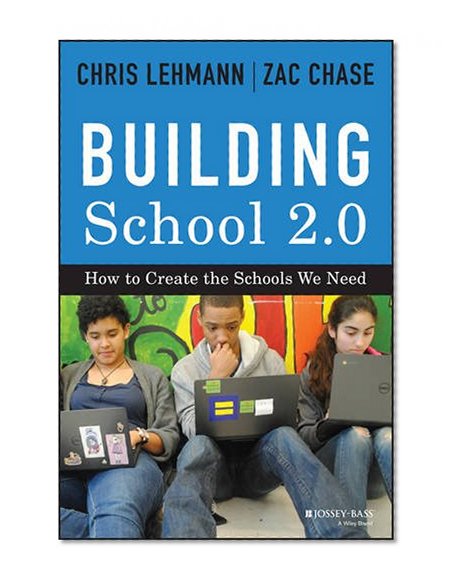
There is a growing desire to reexamine education and learning. Educators use the phrase "school 2.0" to think about what schools will look like in the future. Moving beyond a basic examination of using technology for classroom instruction, Building School 2.0: How to Create the Schools We Need is a larger discussion of how education, learning, and our physical school spaces can—and should—change because of the changing nature of our lives brought on by these technologies.
Well known for their work in creating Science Leadership Academy (SLA), a technology-rich, collaborative, learner-centric school in Philadelphia, founding principal Chris Lehmann and former SLA teacher Zac Chase are uniquely qualified to write about changing how we educate. The best strategies, they contend, enable networked learning that allows research, creativity, communication, and collaboration to help prepare students to be functional citizens within a modern society. Their model includes discussions of the following key concepts:
- Technology must be ubiquitous, necessary, and invisible
- Classrooms must be learner-centric and use backwards design principles
- Good technology can be better than new technology
- Teachers must serve as mentors and bring real-world experiences to students
Each section of Building School 2.0 presents a thesis designed to help educators and administrators to examine specific practices in their schools, and to then take their conclusions from theory to practice. Collectively, the theses represent a new vision of school, built off of the best of what has come before us, but with an eye toward a future we cannot fully imagine.