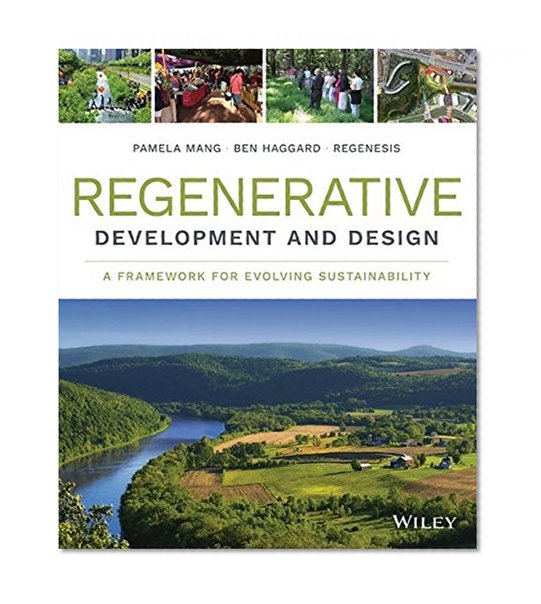
Regenerative Development and Design takes sustainability to the next level, and provides a framework for incorporating regenerative design principles into your current process. The Regenesis Group is a coalition of experienced design, land-use, planning, business, and development professionals who represent the forefront of the movement; in this book, they explain what regenerative development is, how and why it works, and how you can incorporate the fundamental principles into your practice. A clear, focused framework shows you how to merge regenerative concepts with your existing work, backed by numerous examples that guide practical application while illustrating regenerative design and development in action. As the most comprehensive and systemic approach to regenerative development, this book is a must-have resource for architects, planners, and designers seeking the next step in sustainability.
Regenerative design and development positions humans as co-creative and mutually-evolving participants in an ecosystem not just a built environment. This book describes how to bring that focus to your design from the earliest stages.
- Understand the fundamentals of regenerative design and development
- Learn how regenerative development contributes to sustainability
- Integrate regenerative development concepts into practice
- Examine sample designs that embody the regenerative concept
To create a design with true sustainability, considerations must extend far beyond siting, materials, and efficiency. Designers must look at the place, it's inhabitants, and the purpose the whole living ecosystem and proceed with their work from that more humbling perspective. The finished product should itself be an ecosystem and sustainable economy, which is the root of the regenerative development approach. Sustainability has evolved, and the designer's responsibility has increased in kind. Regenerative Developmentand Design provides an authoritative resource for those ready to take the next step forward.