A bold challenge to our obsession with efficiency--and a new understanding of how to benefit from the powerful potential of serendipity
Algorithms, multitasking, the sharing economy, life hacks: our culture can't get enough of efficiency. One of the great promises of the Internet and big data revolutions is the idea that we can improve the processes and routines of our work and personal lives to get more done in less time than we ever have before. There is no doubt that we're performing at higher levels and moving at unprecedented speed, but what if we're headed in the wrong direction?
Melding the long-term history of technology with the latest headlines and findings of computer science and social science, The Efficiency Paradox questions our ingrained assumptions about efficiency, persuasively showing how relying on the algorithms of digital platforms can in fact lead to wasted efforts, missed opportunities, and above all an inability to break out of established patterns. Edward Tenner offers a smarter way of thinking about efficiency, revealing what we and our institutions, when equipped with an astute combination of artificial intelligence and trained intuition, can learn from the random and unexpected.
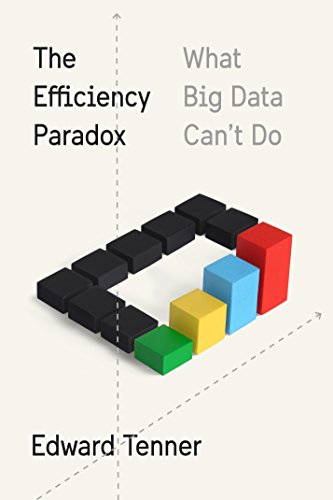
The Efficiency Paradox: What Big Data Can't Do
📄 Viewing lite version
Full site ›
Book Details
Author(s)Tenner, Edward
PublisherKnopf
ISBN / ASIN1400041392
ISBN-139781400041398
AvailabilityIn Stock.
Sales Rank164,006
MarketplaceUnited States 🇺🇸
Description ▲
Similar Products ▼
- The Tyranny of Metrics
- Reinventing Capitalism in the Age of Big Data
- Meltdown: Why Our Systems Fail and What We Can Do About It
- AIQ: How People and Machines Are Smarter Together
- In Defense of Troublemakers: The Power of Dissent in Life and Business
- Prediction Machines: The Simple Economics of Artificial Intelligence
- The Book of Why: The New Science of Cause and Effect
- Artificial Unintelligence: How Computers Misunderstand the World (The MIT Press)
- Human + Machine: Reimagining Work in the Age of AI
- Why Things Bite Back: Technology and the Revenge of Unintended Consequences (Vintage)