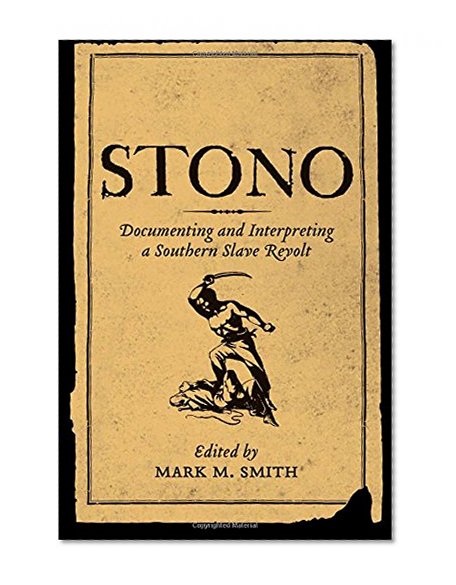
Stono: Documenting and Interpreting a Southern Slave Revolt
📄 Viewing lite version
Full site ›
Book Details
PublisherUniversity of South Carolina Press
ISBN / ASIN1570036055
ISBN-139781570036057
AvailabilityUsually ships in 24 hours
Sales Rank355,831
CategoryHistory
MarketplaceUnited States 🇺🇸
Description ▲
In the fall of 1739, as many as one hundred enslaved African and African Americans living within twenty miles of Charleston joined forces to strike down their white owners and march en masse toward Spanish Florida and freedom. More than sixty whites and thirty slaves died in the violence that followed. Among the most important slave revolts in colonial America, the Stono Rebellion also ranks as South Carolina's largest slave insurrection and one of the bloodiest uprisings in American history. Significant for the fear it cast among lowcountry slaveholders and for the repressive slave laws enacted in its wake, Stono continues to attract scholarly attention as a historical event worthy of study and reinterpretation. Edited by Mark M. Smith, Stono: Documenting and Interpreting a Southern Slave Revolt introduces readers to the documents needed to understand both the revolt and the ongoing discussion among scholars about the legacy of the insurrection. Smith has assembled a compendium of materials necessary for an informed examination of the revolt. Primary documents-including some works previously unpublished and largely unknown even to specialists-offer accounts of the violence, discussions of Stono's impact on white sensibilities, and public records relating incidents of the uprising. To these primary sources Smith adds three divergent interpretations that expand on Peter H. Wood's pioneering study Black Majority: Negroes in Colonial South Carolina from 1670 through the Stono Rebellion. Excerpts from works by John K. Thornton, Edward A. Pearson, and Smith himself reveal how historians have used some of the same documents to construct radically different interpretations of the revolt's causes, meaning, and effects.
More Books in History
The Bet, and Other Stories
View
Pakistan and the Bomb: Public Opinion and Nuclear Opti…
View
Writing National Histories: Western Europe Since 1800
View
Empire in Eclipse
View
Monks and Laymen in Byzantium, 843-1118
View
The Wilmington and Western Railroad (Images of Rail: D…
View
Black Sailor, White Navy: Racial Unrest in the Fleet d…
View
Feasibility of Laser Power Transmission to a High-Alti…
View
The Democratic Republic: 1801-1815
View