How can we “fix” our schools? Improve graduation rates in college? What works?
These are questions that make the headlines and vex policy makers, practitioners, and educational researchers. While they strive to improve society, there are frequently gulfs of mutual incomprehension among them.
Academics, longing for more influence, may wrongly fault irrationality, ideology, or ignorance for the failure of research to inform policy and practice more powerfully. Policy makers and practitioners may doubt that academics can deliver ideas that will reliably yield desirable results.
This book bridges the divide. It argues that unrealistic expectations lead to both unproductive research and impossible standards for “evidence-based” policy and practice, and it offers promising ways for evidence to contribute to improvement. It analyzes the utility and limitations of the different research methods that have been applied to policy and practice, as well as the strengths and weaknesses of educational reform strategies. It explains why using evidence for “accountability” often makes things worse rather than better.
Paul Lingenfelter offers educational researchers and policy makers a framework for considering such questions as: What problems are important and accessible? What methods will be fruitful? Which help policy makers and practitioners make choices and learn how to improve? What information is relevant? What knowledge is valid and useful? How can policy makers and practitioners establish a more productive division of labor based on their respective capabilities and limitations?
He cautions against the illusion that straight-forward scientific approaches and data can be successfully applied to society’s most complex problems. While explaining why no single policy or intervention can solve complex problems, he concludes that determination, measurement, analysis, and adaptation based on evidence in specific situations can lead to significant improvement.
This positive, even-handed introduction to the use of research for problem-solving concludes by suggesting emerging practices and approaches that can help scholars, practitioners, and policy leaders become more successful in reaching their fundamental goals.
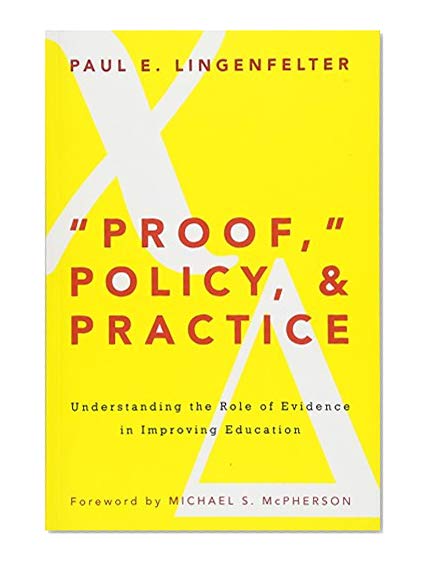
"Proof," Policy, and Practice: Understanding the Role of Evidence in Improving Education
📄 Viewing lite version
Full site ›
Book Details
Author(s)Paul E. Lingenfelter
PublisherStylus Publishing
ISBN / ASIN1579227511
ISBN-139781579227517
AvailabilityUsually ships in 24 hours
Sales Rank142,138
MarketplaceUnited States 🇺🇸
Description ▲
Similar Products ▼
- Learning to Improve: How America’s Schools Can Get Better at Getting Better
- The Improvement Guide: A Practical Approach to Enhancing Organizational Performance
- X-teams: How to Build Teams That Lead, Innovate and Succeed
- Act Like a Leader, Think Like a Leader
- The Progress Principle: Using Small Wins to Ignite Joy, Engagement, and Creativity at Work
- Seeing the Big Picture: Business Acumen to Build Your Credibility, Career, and Company
- How Learning Works: Seven Research-Based Principles for Smart Teaching
- The Research Journey: Introduction to Inquiry
- Toyota Kata: Managing People for Improvement, Adaptiveness and Superior Results
- Reframing Organizations: Artistry, Choice, and Leadership