In the minds of some, universal salvation is a heretical idea that was imported into Christianity from pagan philosophies by Origen (c.185–253/4). Ilaria Ramelli argues that this picture is completely mistaken. She maintains that Christian theologians were the first people to proclaim that all will be saved and that their reasons for doing so were rooted in their faith in Christ. She demonstrates that, in fact, the idea of the final restoration of all creation (apokatastasis) was grounded upon the teachings of the Bible and the church’s beliefs about Jesus’ total triumph over sin, death, and evil through his incarnation, crucifixion, resurrection, and ascension.
Ramelli traces the Christian roots of Origen’s teaching on apokatastasis. She argues that he was drawing on texts from Scripture and from various Christians who preceded him, theologians such as Bardaisan, Irenaeus, and Clement. She outlines Origen’s often-misunderstood theology in some detail and then follows the legacy of his Christian universalism through the centuries that followed. We are treated to explorations of Origenian universal salvation in a host of Christian disciples, including Athanasius, Didymus the Blind, the Cappadocian fathers, Evagrius, Maximus the Confessor, John Scotus Eriugena, and Julian of Norwich.
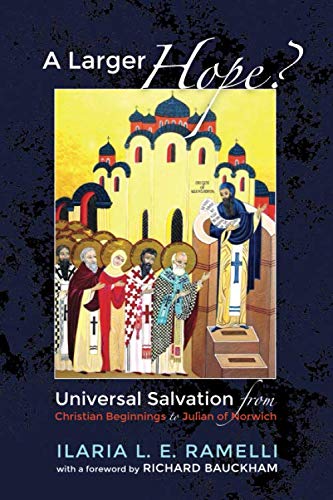
A Larger Hope?, Volume 1: Universal Salvation from Christian Beginnings to Julian of Norwich
📄 Viewing lite version
Full site ›
Book Details
Author(s)Ilaria L. E. Ramelli
PublisherCascade Books
ISBN / ASIN1610978846
ISBN-139781610978842
AvailabilityUsually ships in 24 hours
Sales Rank309,865
MarketplaceUnited States 🇺🇸
Description ▲
Similar Products ▼
- That All Shall Be Saved: Heaven, Hell, and Universal Salvation
- A Larger Hope?, Volume 2: Universal Salvation from the Reformation to the Nineteenth Century
- The New Testament: A Translation
- The Mystery of Castle MacGorilla
- Universalism, the Prevailing Doctrine of the Christian Church During Its First Five Hundred Years: With Authorities and Extracts
- The Inescapable Love of God: Second Edition
- Patristic Universalism: An Alternative to the Traditional View of Divine Judgment
- The New Testament: A Translation
- The Experience of God: Being, Consciousness, Bliss
- History and Eschatology: Jesus and the Promise of Natural Theology