In 1026, Sultan Mahmud of Ghazni raided the Hindu temple of Somanatha (Somnath in textbooks of the colonial period). The story of the raid has reverberated in Indian history, but largely during the raj. It was first depicted as a trauma for the Hindu population not in India, but in the House of Commons. The triumphalist accounts of the event in Turko-Persian chronicles became the main source for most eighteenth-century historians. It suited everyone and helped the British to divide and rule a multi-millioned subcontinent.
In her new book, Romila Thapar, the doyenne of Indian historians, reconstructs what took place by studying other sources, including local Sanskrit inscriptions, biographies of kings and merchants of the period, court epics and popular narratives that have survived. The result is astounding and undermines the traditional version of what took place. These findings also contest the current Hindu religious nationalism that constantly utilises the conventional version of this history.
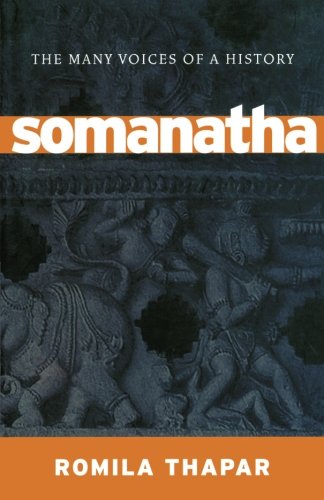
Somanatha: The Many Voices of a History
📄 Viewing lite version
Full site ›
Book Details
Author(s)Romila Thapar
PublisherVerso
ISBN / ASIN1784780650
ISBN-139781784780654
AvailabilityUsually ships in 24 hours
Sales Rank3,421,818
CategoryHistory
MarketplaceUnited States 🇺🇸
Description ▲
More Books in History
The Bet, and Other Stories
View
Pakistan and the Bomb: Public Opinion and Nuclear Opti…
View
Writing National Histories: Western Europe Since 1800
View
Empire in Eclipse
View
Monks and Laymen in Byzantium, 843-1118
View
The Wilmington and Western Railroad (Images of Rail: D…
View
Black Sailor, White Navy: Racial Unrest in the Fleet d…
View
Feasibility of Laser Power Transmission to a High-Alti…
View
The Democratic Republic: 1801-1815
View