The Wealth of Nations is a treasured classic of political economy. First published in March of 1776, Adam Smith wrote the book to influence a special audience - the British Parliament - and its arguments in the early spring of that year pressed for peace and cooperation with Britain's colonies rather than war.
Smith's message was that economic exploitation, through the monopoly trade of empire, stifled wealth-creation in both home and foreign lands. Moreover, protectionism preserved the status quo, and privileged a few elites at the expense of long run growth.
Smith wrote, "It is the industry which is carried on for the benefit of the rich and the powerful that is principally encouraged by our mercantile system. That which is carried on for the benefit of the poor and the indigent is too often either neglected or oppressed."
This edition, based on the classic Cannan version of the text, includes a foreword by George Osborne MP and an introduction by Jonathan B. Wight, University of Richmond, which aims to place the work in a business context. Wight also provides an invaluable 'Notable Quotes' section where he extracts and categorises some of the most famous and pertinent sections of Smith's work.
This classic work is as essential today as it was when it first written.
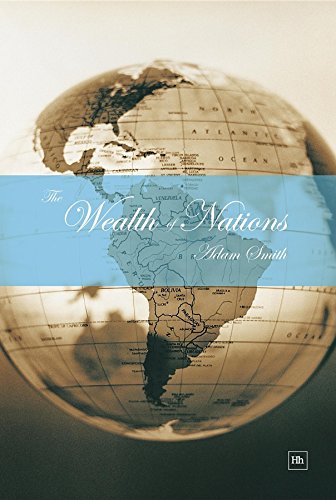
The Wealth of Nations: An Inquiry into the Nature and Causes of the Wealth of Nations
📄 Viewing lite version
Full site ›
Book Details
Author(s)Adam Smith
PublisherHarriman House
ISBN / ASIN1905641265
ISBN-139781905641260
Sales Rank421,742
CategoryBusiness & Economics
MarketplaceUnited States 🇺🇸
Description ▲
More Books in Business & Economics
Business Cycles and Forecasting
View
Development Economics: Its Position in the Present Sta…
View
Cost Systems Design
View
So You Want to Dance on Broadway
View
The Blueprint: Reviving Innovation, Rediscovering Risk…
View
Managing IT Outsourcing, Second Edition
View
Education and the Creation of Capital in the Early Ame…
View
Global Corruption Report 2005: Special Focus: Corrupti…
View
More Tales for Trainers: Using Stories and Metaphors t…
View