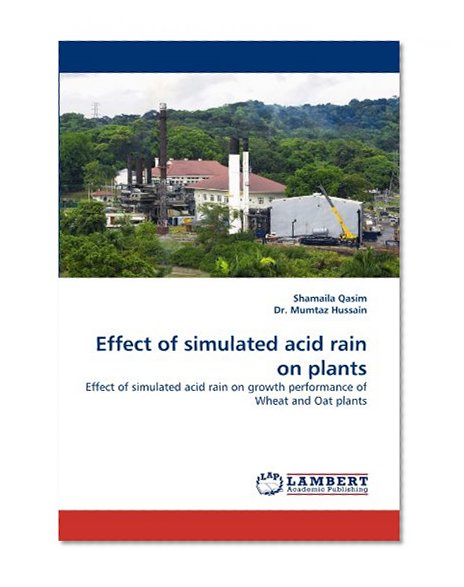
Effect of simulated acid rain on plants: Effect of simulated acid rain on growth performance of Wheat and Oat plants
📄 Viewing lite version
Full site ›
Book Details
Author(s)Shamaila Qasim, Dr. Mumtaz Hussain
PublisherLAP LAMBERT Academic Publishing
ISBN / ASIN384430505X
ISBN-139783844305050
AvailabilityUsually ships in 24 hours
MarketplaceUnited States 🇺🇸
Description ▲
Environmental pollution occurs due to release of harmful gases from industrial units. It results in the form of acid rain either wet or dry form. Factories, vehicles, power stations and industries burn fossil fuels and produce harmful gases, comprising sulfur dioxide, or oxides of nitrogen, which become the major course of acid rain. Acid rain sometimes falls in the form of precipitation which can be snow, rain, dew or fog. Dry deposition is absorption of particles such as polluting gases, dust particles and gaseous elements by the surface of the Earth. The pH level of acid rain may be less than 7 but when the concentration of pollutants increases in the atmosphere, it further decreases and strong acids like sulfuric and nitric acid are formed. Acid rain induces visible lesion injury on plant shoots and on other tissues. It also destroys epicuticular wax; reduces photosynthetic rate and chlorophyll contents. Acid rain in plants can considerably reduce plant height, number of leaves, fresh and dry weight contents. The objective of the study was to evaluate the effect of simulated acid rain on the growth performance of Wheat and Oat crops.