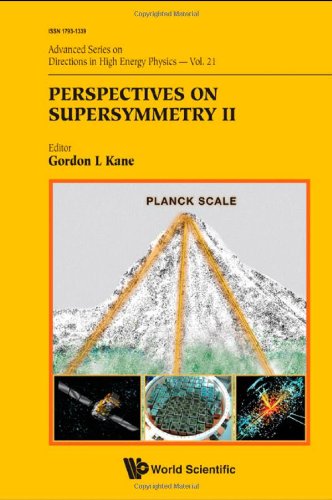
This volume begins with an excellent pedagogical introduction to the physics and methods and formalism of supersymmetry which is accessible to anyone with a basic knowledge of the Standard Model of particle physics. Next is an overview of open questions, followed by chapters on topics such as how to detect superpartners and tools for studying them, the current limits on superpartner masses as we enter the LHC era, the lightest superpartner as a dark matter candidate in thermal and non-thermal cosmological histories, and associated Z' physics. Most chapters have been extended and updated from the earlier edition and some are new.
This superb book will allow interested physicists to understand the coming experimental and theoretical progress in supersymmetry and the implications of discoveries of superpartners, and will also help students and workers to quickly learn new aspects of supersymmetry they want to pursue.