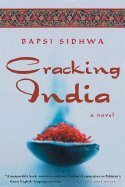
Cracking India: A Novel
📄 Viewing lite version
Full site ›
Book Details
Author(s)Sidhwa. Bapsi
PublisherMilkweed
ISBN / ASINB000IXQXTG
ISBN-13978B000IXQXT2
Sales Rank2,462,592
MarketplaceUnited States 🇺🇸
Description ▲
Previously published as: Ice-candy-man.
From Publishers Weekly
The narrator of Sidwha's (The Bride) timely novel about the violent 1947 partition of India is the extremely observant Lenny Sethi, whose family belongs to the Parsee community in Lahore. As a child, a polio victim and a member of a minority, she is the perfect witness (though somewhat precocious) to the historic upheaval. Sidwha tempers Lenny's hyper-awareness, however, by capturing the whole range of her fears and joys as her innocence becomes another casualty of the violence among Moslems, Sikhs and Hindus. At one point Lenny declares: "Lying doesn't become me. I can't get away with the littlest thing." Persuasive, this statement reinforces earlier comments she lets slip about herself which display this artless candor: "the manipulative power of my limp"; "I place a hypocritical arm protectively round her shoulders." Lenny's honesty is compelling, and the reader, like many in the story, cannot help but trust her. She is alternately thrilled and frightened by the events she dutifully records, and so, in the end, is the reader.
c1991 Reed Business Information, Inc.
From Library Journal
Written in the 1st person by a sparsely educated Parsee girl in Lahore named Lenny, who grows from four to eight as she narrates, this novel is incongruously overloaded with erudite diction. Thus, unlike Huck Finn's tale, this child's story becomes unbelievable. Despite the title, it focuses on the everyday lives of Lenny, her family, and their associates, often interesting but frequently trivial. Throughout the book, Lenny includes verbatim transcriptions of extended conversations/situations about racial relations, sex, politics, religion, and selected aspects of the 1947 Partition. Sadly, the promise of the novel (semi-autobiographical?) is inadequately fulfilled and seems to falter from its conception. -- Glenn O. Carey, Eastern Kentucky Univ., Richmond
c1991 Reed Business Information, Inc.