(Revised 3/2014 - We have combined our Edward Curtis: Pacific Northwest Tribes (A-K) & (L-Z) books into one larger volume with HD (high definition) images. Now with over 285+ Photographic Reproductions covering 20 different Native American Tribes.)
EDWARD CURTIS: PACIFIC NORTHWEST TRIBES Art Book contains 285+ HD Photographic Reproductions of Native American Indian Life in the Pacific Northwest with annotations, biography, tribal information and resource links. Book includes Table of Contents and is formatted for all Kindle devices, Kindle for iOS and Android tablets (use rotate and/or zoom feature on landscape/horizontal images for optimal viewing).
Pacific Northwest Tribes
Achomawi
Chimakum
Chukchansi Yokuts
Clayoquot
Cowichan
Haida
Hesquiaht
Hupa
Karok
Klamath
Kwakiutl & Koskimo
Lummi
Makah
Nootka
Puget Sound Salish
Quinault
Skokomish
Tolowa
Yurok
Edward Sheriff Curtis was born on February 16, 1868 in Whitewater, Wisconsin. His father, Reverend Asahel “Johnson†Curtis, was also a Civil War Veteran. Although he had purchased and attempted to work a farm, Rev. Curtis was so weakened by the war that the family suffered severe poverty and hardship. In 1874 they moved to Minnesota to work with Rev. Curtis’ father, also named Asahel, in his grocery store. He was also the Postmaster.
Even after moving, the Curtis family’s life was difficult. Edward, also called Eddy, often supplemented the family dinner table with whatever he could catch—muskrats, snapping turtles, fish. He left school in sixth grade, and soon after, built himself a camera, after discovering a camera lens brought home by his father from the war and following instructions he found in Wilson’s Photographics. Taking photographs was a welcome addition to his dreary life, and it was something to be proud of. But at age fourteen he was forced to mostly put the camera aside; with his older brother leaving home and his father becoming more and more ill, it was left to him to support the family. He got a part-time job with the railroad, and relied more than ever on bringing home wildlife to provide the family food, along with the kitchen garden that he planted. Still, photography remained a passion, and by age 17 he had become apprenticed to a photographer in St. Paul. Two years later, having tapped out all their possibilities in Minnesota the entire family moved west to Puget Sound, Washington. Eddy and his father went out first. They homesteaded, building a cabin, planting a garden and fruit trees. A few months later, in the spring of 1888, the rest of the family joined them. But the happy reunion was short-lived, as Rev. Curtis’ health problems finally caught up with him, and he died of pneumonia three days after the rest of the family arrived. A near-fatal accident falling from a log severely damaged Eddy’s spine not long after, causing him to remain nearly bed-ridden for almost a year.
The forced inactivity, however, gave Curtis time to look out the window at the beautiful Washington landscapes, and also time to return to experimenting with photography. He decided to pursue photography professionally, and moved to Seattle, where he purchased a partnership in a photographic studio for $150. He was soon joined by Clara Phillips, with whom he had begun a friendship back in Puget Sound, and they were married. After six months in his original partnership, he left to form a new studio with Thomas Guptill, “Curtis and Guptill Photographers and Photoengraversâ€. Success followed rapidly, and after just four years in Seattle he had become very well-known in the community. His claim was to produce the “…finest photographic work in the city†and it seemed everyone agreed. (cont)
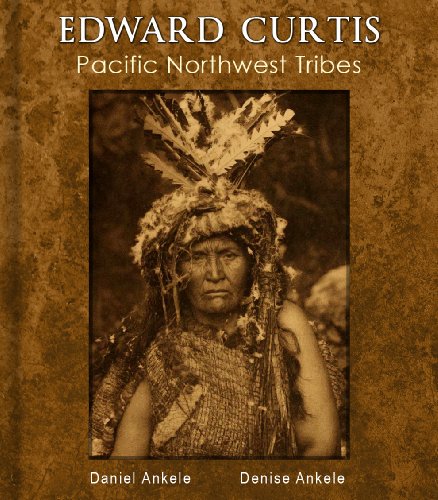
Edward Curtis: Pacific Northwest Tribes - 285+ Native American Indian Photographs
📄 Viewing lite version
Full site ›
Price not listed
🛒 Buy New on Amazon 🇺🇸
Book Details
Author(s)Daniel Ankele, Denise Ankele
PublisherAnkele Publishing, LLC
ISBN / ASINB00ASNL5P8
ISBN-13978B00ASNL5P7
Sales Rank459,271
MarketplaceUnited States 🇺🇸