The automobile was still sharing roads with horses when the gears started turning to create a coast-to-coast highway along the nation's southern tier. The plan was to connect the towns that had sprung from Spanish forts and missions dating back to the 1500s. The core of the route would link the towns of St. Augustine, New Orleans, San Antonio, El Paso, Tucson and San Diego.
A conference was held in Mobile, Alabama on December 11, 1915 to lay the groundwork for a road to run from New Orleans to the Atlantic coast of Florida and subsequent conferences followed with San Antonio being designated the headquarters of the venture. Such a paved road would not only promote tourism and commerce from the new auto travelers but also aid the United States War Department in deploying troops and materiel for the nation's defense.
The first zero-mile stone for the Old Spanish Trail was placed in San Diego on November 17, 1923 with a message from President Calvin Coolidge read at the dedication. The following year a five-ton boulder of Texas granite said to be one million years old was placed in Military Plaza in the center of San Antonio as the marker from which all distances would be measured on the Trail. In April of 1929 a zero-mile stone was unveiled in St. Augustine, just in time to greet the first motorcade from San Diego to St. Augustine. The caravan motored back in October after assembling "the biggest motorcade ever staged." Torrential rains and severe flooding had reduced the travel party to just 15 cars by the time it rolled into New Mexico.
The Old Spanish Trail crossed through eight states and 67 counties in its 3,000-mile journey. It had eliminated 35 ferry crossings in creating the shortest American link between the Atlantic and Pacific Oceans, although bridge crossings of the Mississippi River and Berwick Bay in Morgan City, Louisiana were still several years away. Most of the Old Spanish Trail followed US 90 and US 80 across America's southern border.
In the 1950s the Old Spanish Trail Association saw the peril lurking in the planned interstate highway system and tagged itself "America's Highway of Romance!" to lure travelers back to the road. But romance could not compete with speed and convenience and shortly after the completion of I-10 the Old Spanish Trail had gone the way of the conquistadores. Parts of the roadway still exist in places and planning is already underway for the Centennial Motorcade in 2029.
You don't have to wait until then to visit the towns of the Old Spanish Trail, which now include three of America's eight most populated communities...
Town Tours Included:
St. Augustine
Jacksonville
Tallahassee
Mobile
New Orleans
Houston
San Antonio
El Paso
Tucson
Phoenix
Yuma
San Diego
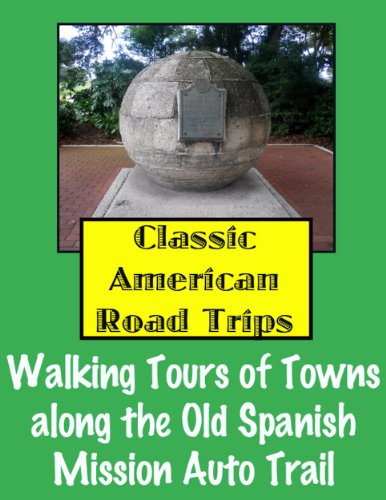
Classic American Road Trips: Walking Tours of Towns along the Old Spanish Auto Trail (Look Up, America!)
📄 Viewing lite version
Full site ›
Price not listed
🛒 Buy New on Amazon 🇺🇸
Book Details
Author(s)Doug Gelbert
Publisherwalkthetown.com
ISBN / ASINB00DVTZFC0
ISBN-13978B00DVTZFC2
Sales Rank1,876,973
MarketplaceUnited States 🇺🇸