Search Books

The Four Vedas: Rgveda, Samaveda, Yajurveda, Atharvaveda (Set of 9 Volumes) - Sanskrit Text with English Translation
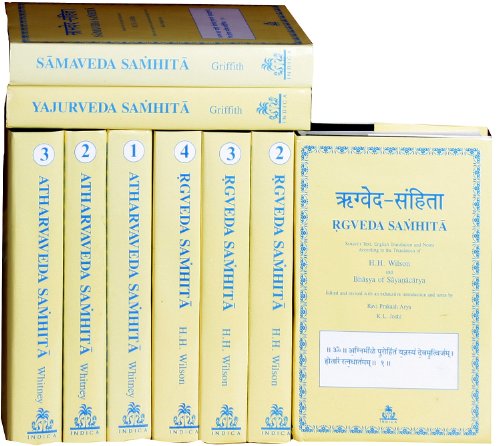
Author Edited By: Ravi Prakash Arya and K.L. Joshi Translated By : HH. Wilson and Bhasya of Sayanacarya
Publisher Indica Books
📄 Viewing lite version Full site ›
🌎 Shop on Amazon — choose country
Price not listed
🛒 Buy New on Amazon 🇺🇸
Share:
Book Details
PublisherIndica Books
ISBN / ASINB00GC87H32
ISBN-13978B00GC87H34
Sales Rank1,199,238
MarketplaceUnited States 🇺🇸

Description

Language: Sanskrit Text With English Translation
Pages: 5572


Rgveda Samhita (Set of 4 Volumes)


Introduction
Origin of Speech

When we take to the study of language, the first and foremost question stands as to how when and where the language originated. More the linguists troubled their head in this direction, the less they achieved success. So far it has remained an unsolved conundrum. The more it was solved, the more it became, complex. Now many linguistic societies in the world have banned to raise this question again on the forum. Among the hosts of theories put forward on the origin of speech, one is regarding the divine origin of speech. So long it has been contended by almost all the scholars both at home and abroad that the Vedas are the propounder of this theory. In this connection a number of observations made by Vedic Seers have been cited, e.g.


‘samskrtam nama daivi vaganvakhyata maharsibhih’
‘daivim vacamayajanta devah tam visvarupah pasvo vadanti’ (RV. 8.100.11)


‘tasmat yajnat sarvahuta rcah samani jajnire
Chandamsi jajnire tasmad yajustasmadajayata’ (VS. 31.7)
‘aptopadesah sadhab’ (Nyayasastra 1.1)
‘agni vayuravibhyastu trayam brahma sanatanam
Dudoha yajna siddhyarthamrgyajuh sama laksanam’ (Svetasvatara Up. 6.18)


‘tebhyastaptebhyastravo vedajayanta agnerrgvedo
Vayoryajurvedah suryat samavedah’ (Satapatha Br. 11.5.8.3)
‘evam va are’ sya mahatobhutasya nihsvasitam
Etadyadrgvedo yajurvedah samavedo ‘tharvangirasah’

Simply quoting these observations without understanding the actual intended sense of the speakers, everybody assumed without applying mind that they support the divine origin of I speech. Nobody least bothered as to what sys