??INTRODUCTION & USE
This document has been prepared for use by Enroute Critical Care Nurses (ECCN) engaged in the conduct of air and/or ground transport of critically ill or injured post-resuscitation patients from Role 2 and Role 3 medical treatment facilities (MTFs). By their nature, such operations may be wide in scope, involving the care and transport of U. S. Service Members, coalition partners, host nation military and civilian personnel, enemy prisoners of war and contractors (U.S. and Third
Party Nationals).
The Medical Brigade or Task Force Commander and Chief Nurse along with the ECCN Theater Medical Director have approved this document as Standing Medical Orders (SMO)/Patient Treatment Protocols for the ECCN. Each section should be reviewed at least annually and updated as appropriate. Also, any change in in-theater medical director or chief nurse should prompt a review. All Patient Treatment Protocol updates must be sequentially numbered, dated and signed. If required changes are needed due to the operational environment or change in mission, a rapid revision process is required and may be approved by the medical director. A current copy of the protocols should be kept at the Medical Brigade/Task Force HQ, provided to the CENTCOM Surgeon’s office, Joint Trauma System and each ECCN should be provided a full size and portable copy. All Role 2 and Role 3 providers responsible for preparing critically ill patients for transport within the AOR should be familiar with these protocols and the Joint Theater Trauma System (JTTS) Clinical Practice Guidelines (CPGs) (Enclosure 1).
According to the JTTS CPG, “the transferring provider should identify the need for specialized medical attendants possessing the necessary training and ability to provide appropriate enroute critical care for patients requiring transport.” It is the responsibility of the transferring physician to write enroute care orders appropriate for the transport environment and individualized for each patient. A standing order set for critical care transfers is included in this document (Enclosure 2).
This document is not meant to be a comprehensive manual for patient care. Critical care providers must have demonstrated competence in the skills approved in these protocols in order to independently perform the procedures. Critical care providers, using their critical thinking and advanced assessment skills must assess the patient and determine if the patient’s problem/situation requires intervention, intervene as needed to provide the patient with required care and evaluate the patient’s response to the intervention. Documentation of the patient’s progress, interventions performed and the patient’s response are required in the CENTCOM Enroute Critical Care (ECC) Transfer Document (Enclosure 3). Also, the individual patient’s orders written by the transferring physician for transport must be included in the patient care record. These treatment protocols should be used as a guideline for the ECCN along with the orders for care received from the transferring physician.
The protocols should be followed, but do not substitute for critical thinking and professional nursing/medical judgment by those ECCN’s employing them. Under occasional circumstances, mission requirements or a patient’s condition may require the ECCN to deviate from the stated protocol without immediate access to medical direction. Under such circumstances, deviations should be limited to the level of training and competency of the provider, always remembering the dictum “First, Do No Harm”. In ANY case, all care rendered REQUIRES DOCUMENTATION. Depending on the incident and the outcome of the patient, there may be further questioning and review of each case.
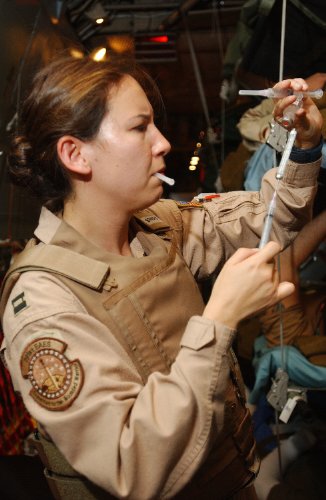
MEDEVAC ENROUTE MEDICAL CRITICAL CARE NURSE PROTOCOLS
📄 Viewing lite version
Full site ›
Price not listed
🛒 Buy New on Amazon 🇺🇸
Book Details
Author(s)U.S. Army
PublisherU.S. Army
ISBN / ASINB00HOLGY0S
ISBN-13978B00HOLGY02
Sales Rank2,769,858
MarketplaceUnited States 🇺🇸