Choosing to embark on the tennis journey has lifelong benefits. Tennis is an individual, elite sport. Participation in the game of tennis breeds leaders. Finding a way through a tough opponent even though you’re having a bad day is persistence. Staying in the right side of your brain even when things are clearly not going well is persistence. Staying engaged until the very last point is persistence. Design a plan of action, a focal point for each day’s practice session. By far, the most important issue is playing their game. That means exposing your strengths, hiding your weakness and running your best patterns to perfection. In essence, it’s about pulling the opponent into your best style of tennis. Small adaptations, as well as complete different tactical approaches, are needed to be developed. Let’s first take a look at what mental training actually is. Mental, emotional training is the practical application of finding solutions to common pitfalls. We often hear,
"I have trouble closing out a 5-2 lead",
"I play terrific in practice but horribly in matches",
“I can't beat a moonball, pusher",
"I can't handle cheaters!",
"I have trouble focusing for the whole match!"
Mental, emotional training focuses on solving these issues.
You may be hesitant and a bit unclear about the role of mental or emotional training. This type of instruction involves more than simple fundamental stroke production. Developing the "hidden" skill set within your game is crucial for peak performance. It is a myth that only players with abnormal behavioral problems need mental or emotional guidance.
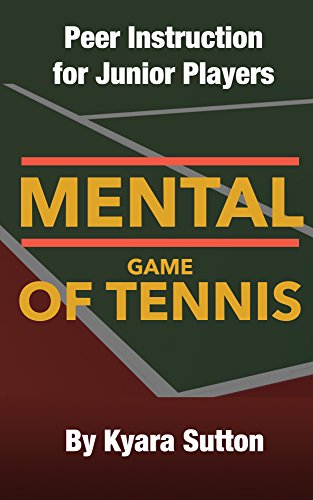
The Mental Game of Tennis: Peer Instruction for Junior Players (An Edition Specifically Written for Junior Girls Book 1)
📄 Viewing lite version
Full site ›
Price not listed
🛒 Buy New on Amazon 🇺🇸
Book Details
Author(s)Frank Giampaolo, Kyara Sutton
PublisherDigital Tribe, Inc.
ISBN / ASINB00KWSC2U6
ISBN-13978B00KWSC2U0
Sales Rank487,349
MarketplaceUnited States 🇺🇸