High-performance liquid chromatography has become the predominant global separation technique over the past four decades. However, the recent development of an alternative column packing material - a one-piece porous solid known as a ‘monolith’ - has transformed the field. Monoliths have attracted a large amount of interest due to the enhanced speed and thoroughness with which they can separate complex mixtures of biological molecules.
Monoliths are porous rod structures characterized by mesospheres and macro pores. These pores provide monoliths with high permeability, a large number of channels and a high surface area available for re-activity. The backbone of a monolithic column is composed of either an organic or inorganic substrate and can easily be chemically altered for specific applications. Their unique structure gives them several physico-mechanical properties that enable them to perform competitively against traditionally packed columns.
In this book, global experts comprehensively describe this developing field. Part I covers the synthesis and characterization of the columns and Part II discusses their numerous applications.
This volume will be of interest to those already using monolithic columns, as well as those who are new to the area and would like to know more about this technique.
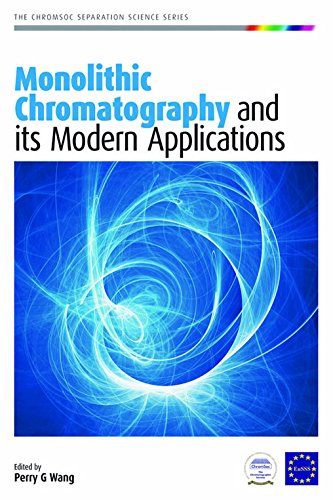
Monolithic Chromatography and its Modern Applications
📄 Viewing lite version
Full site ›
Price not listed
🛒 Buy New on Amazon 🇺🇸
Book Details
Author(s)Perry Wang
PublisherILM Publications
ISBN / ASINB00LBGL68C
ISBN-13978B00LBGL682
Sales Rank2,428,102
MarketplaceUnited States 🇺🇸