The String Quartet No. 14 in C♯ minor, Op. 131, was completed by Ludwig van Beethoven in 1826. (The number traditionally assigned to it is based on the order of its publication; it is actually his fifteenth quartet by order of composition.) About 40 minutes in length, it consists of seven movements played without a break, as follows:
Adagio ma non troppo e molto espressivo
Allegro molto vivace
Allegro moderato – Adagio
Andante ma non troppo e molto cantabile – Più mosso – Andante moderato e lusinghiero – Adagio – Allegretto – Adagio, ma non troppo e semplice – Allegretto
Presto
Adagio quasi un poco andante
Allegro
This work is dedicated to Baron Joseph von Stutterheim, as a gesture of gratitude for taking his nephew, Karl, into the army after a failed suicide attempt. It was Beethoven's favourite of the late quartets; he is quoted as remarking to a friend that he would find "a new manner of part-writing and, thank God, less lack of imagination than before". It is the last-composed of a trio of great works, written in the order 132, 130 with the Große Fuge ending, 131. It is said that upon listening to a performance of this quartet, Schubert remarked, "After this, what is left for us to write?" Robert Schumann said that this quartet and Op. 127 had a "...grandeur [...] which no words can express. They seem to me to stand...on the extreme boundary of all that has hitherto been attained by human art and imagination."
The Op. 131 quartet has been described as a monumental feat of integration. While Beethoven composed the quartet in six distinct key areas, the work begins in C♯ minor and ends in C♯ major. The Finale directly quotes the opening fugue theme in the first movement in its second thematic area. This type of cyclical composition was avant-garde for a work of that period. Joseph Kerman wrote: "blatant functional reference to the theme of another movement: this never happens".
Op. 131 is often grouped with Opp. 132 and 130. There is motivic sharing between all three works. In particular, the "motto" fugue of the leading tone rising to tonic, before leaping up a minor sixth and then dropping down to the dominant, is an important figure shared between all these works. This intervallic material is descendent from Bach, and has been used by other notable composers including Haydn and Mozart.[citation needed] The subject matter of the first movement fugue also closely resembles Bach's own C♯ minor fugue from Book 1 of the Well-Tempered Clavier.
This quartet is one of Beethoven's most elusive works musically. The topic has been written about extensively from very early after its creation, from Karl Holz, the second violinist of the Schuppanzigh Quartet, to Richard Wagner, to contemporary musicologists today. One popular topic is a possible religious/spiritual genesis for this work, supported by similarities to the Missa Solemnis. In the first movement of Op. 131, the continually flowing texture resembles the Benedictus and the Dona Nobis Pacem from the earlier work. In addition, whether purposefully or not, Beethoven quotes a motivic figure from Missa Solemnis in the 2nd movement of the quartet.
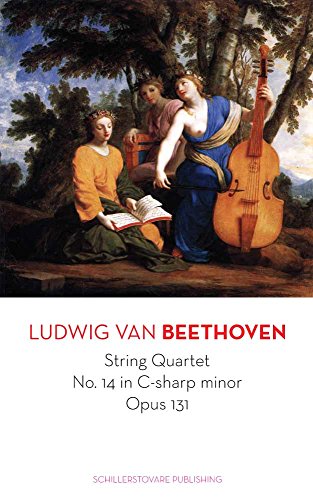
String Quartet No. 14 in C-sharp minor Opus 131 by Ludwig van Beethoven
📄 Viewing lite version
Full site ›
Price not listed
🛒 Buy New on Amazon 🇺🇸
Book Details
Author(s)Ludwig van Beethoven
ISBN / ASINB00LRK3PV8
ISBN-13978B00LRK3PV3
Sales Rank2,022,686
MarketplaceUnited States 🇺🇸