The purpose of this pharmacology study guide is to help nursing graduates work through the vast amount of pharmacological knowledge required for the NCLEX-RN® in a systematic and purposeful way. The breadth and detail of the knowledge required of pharmacological concepts often overwhelms new graduates when they are beginning their exam preparation. This guide organizes content using the current NCLEX-RN® Test Plan and provides specific strategies to address pharmacological areas of review which may challenge new graduates in their exam preparation. The guide was created by an experienced undergraduate nurse educator specializing in critical thinking development and application for high stakes exam writing. Many candidates, while studying for the NCLEX-RN®, often forgo studying pharmacological concepts in the detail required for the exam.
The purpose of the modules in this Pharmacology study guide series are to:
•Provide in-depth review of the major drug classes from a systems approach (e.g. respiratory, nervous system etc…) to help increase retention of key concepts and encourage application of pharmacological therapy in the context of disease management.
•Summarize important information related to drug therapy and guide graduates to in-depth review of serious adverse events associated with medications. The modules will contain summary tables, review questions and exercises for key concepts.
•Direct the reader to important areas for client assessment during drug therapy
This is a working pharmacology study guide, so while key information will be presented and organized for review, it is up to you to do the detailed work of content review by answering the questions and exercises in each module
The following resources are recommended to use with this pharmacology study guide:
1.Pharmacology textbook. This resource will contain the detailed information pertaining to drug classes and specific nursing considerations related to drug therapy.
2.Drug guide. These resources contain alphabetized drug information and outline pharmacokinetic and pharmacodynamics characteristics of medications. You will find important information related to the absorption, distribution, metabolism and excretions of drugs- as well as protein binding and therapeutic index.
3.An online drug repository if the resources above do not contain the information needed to answer the questions in the guide.
This is the first of twelve modules and is part of a comprehensive pharmacology study guide focusing on specific areas which may challenge NCLEX-RN® candidates. This includes drug-to-drug interactions, specific adverse reactions due to drug therapy and the potential reactions associated with herbal therapy and conventional medications. The content will be focused on a systems approach and will direct you towards important information within each drug class.
Each module contains practice questions using NCLEX-RN® formatted questions. It is recommended that you seek additional practice questions from resources that challenge you to go into pharmacological concepts such as serious adverse events and drug-to-drug interactions in detail and test your knowledge specific nursing interventions related to drug therapy.
This first module provides strategies for approaching content related to drug-to-drug interactions in the context of the NCLEX-RN® exam. It begins by reviewing basic pharmacokinetic and pharmcodynamic principles of drug administration and highlights how these principles can be used to decipher drug-to-drug interaction exam questions.
** Unique to this module is a five step algorithm, created by the author, to help graduates approach drug-to-drug interaction questions. This algorithm is designed to help uncover correct answers by using pharmacological principles rather than memorizing drugs that interact with one another. Suggestions are also provided for re-vamping drug cards used for studying purposes.
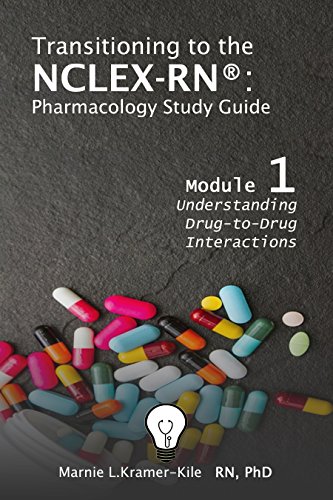
Transitioning to the NCLEX-RN®: Pharmacology Study Guide: Understanding Drug to Drug Interactions (NCLEX-RN® Pharmacology Study Guide Book 1)
📄 Viewing lite version
Full site ›
Price not listed
🛒 Buy New on Amazon 🇺🇸
Book Details
Author(s)Marnie Kramer-Kile
ISBN / ASINB01DXBYAY4
ISBN-13978B01DXBYAY9
Sales Rank1,586,286
MarketplaceUnited States 🇺🇸