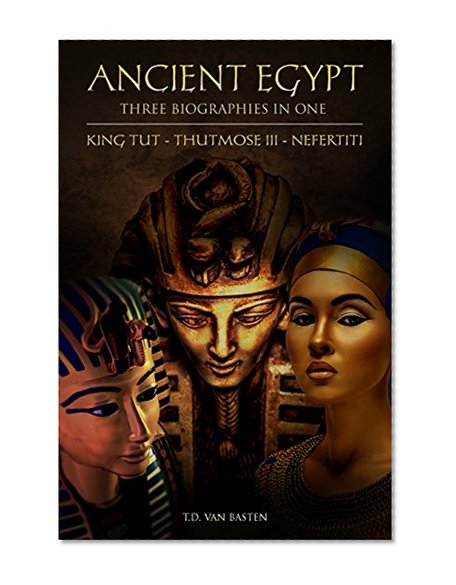
Three Biographies In One
Book 1: The Egypt of King Tut
The Mysterious Reign of King Tutankhamen
Upon the opening of the famous tomb of King Tutankhamen, Carter and his team found a huge array of sumptuous grave goods. However, they also found a very small tomb, lacking the well-known royal depictions and wide array of different paintings and inscriptions. Even the grave goods, while luxurious, did not seem fit for a king for his journey to the afterlife.
The many mysteries surrounding Tut led to many fantastic rumors, including that of a curse on the tomb of the boy-king. Circumstances and seemingly sudden deaths, fueled by media coverage, helped ignite the rumor that there was a curse on the tomb and that those who worked within it or benefited from the goods within it would suffer a grisly fate. There were just enough bizarre coincidences to fuel the rumors and convince many of the existence of a curse on the tomb of King Tut.
Book 2: The Egypt of Thutmose III
The Napoleon of ancient Egypt
Thutmose III was one of the most known and respected of all of Egypt's pharaohs, regardless of dynasty or time period. He ruled during the New Kingdom, which is often seen as the “star-studded” dynasty in ancient Egyptian history because that's the dynasty where many of the “big names” come from. He had the benefit of a lengthy co-rule that allowed him to develop and hone his military skills which would serve him incredibly well during his time in power.
His early life and rule were rather unusual, and he was a powerful person, even when he was just a mere infant. He was the son of Thutmose II and one of his lesser wives of common heritage. Thutmose II was married to the incredibly powerful Queen Hatshepsut, but the two were unable to produce a male heir which meant they had to look to Thutmose II's harem for a suitable successor. Thutmose III was the chosen successor...
Book 3: The Egypt of Nefertiti
Nefertiti's Mysterious Origins
For centuries, the beautiful, mysterious Queen Nefertiti, has captured our imaginations. We do not know very much about the woman's origins, or her demise, which only adds to her mysterious appeal. What we do know, however, is that she was the wife of one of the most controversial and radical of all of ancient Egypt's Pharaohs.
Her husband, Akhenaten, often referred to as the “Heretic King” started a revolution for the proto-monotheistic cult of Aten, the sun disk. This revolution led to dramatic social and political changes during what was later called the Amarna Period. From a huge upheaval in the traditional power structure of the nation, the outlaw of traditional gods, and even the relocation of the capital of the nation, there were actually deliberate attempts from the rulers who came after to erase this period of Egyptian history from the historical record, and they nearly succeeded...