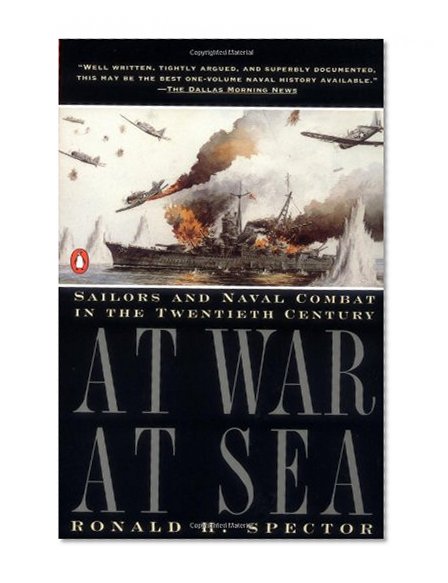


At War at Sea: Sailors and Naval Combat in the Twentieth Century
You can still browse on Amazon. Try another country above.
Spector next covers Jutland ("the greatest clash of battleships in history") in some detail, and makes a claim that informs much of his book: "Even in the matter of big guns, projectiles, and armor, the decisive considerations concerned human judgment, organization, and training." In other words, Jutland wasn't won by technology (despite the voluminous writings on this point by argumentative scholars), but by individual sailors. To emphasize the point, Spector shares the observations of ordinary participants from diaries, letters, and memoirs. Some of them are incredibly lucid. Here is a merchant seaman describing what it's like after a torpedo strikes a ship: "As a rule once you got hit, that's it, you're down like a stone wallop. They've got no chance. Down in about a minute. Gone." Spector then notes that about seven of every 10 merchant ships hit by torpedoes stayed afloat for less than 15 minutes.
Spector does not write with much verve, but he treats his subject with the thoroughgoing seriousness it deserves. At War at Sea is a strong account that will appeal to naval buffs. --John J. Miller

