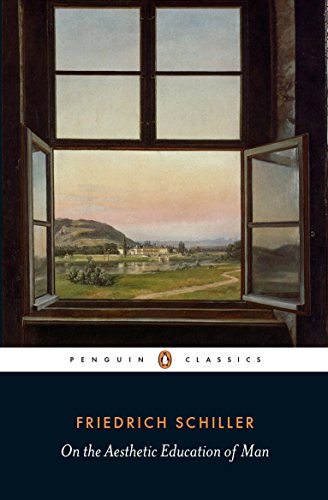
On the Aesthetic Education of Man
Book Details
Author(s)Friedrich Schiller
PublisherPenguin Classics
ISBN / ASIN0141396962
ISBN-139780141396965
AvailabilityUsually ships in 24 hours
Sales Rank350,576
MarketplaceUnited States 🇺🇸
Description
German poet and philosopher Friedrich Schiller’s famous text on art, politics, and society
“The artist is certainly the child of his age, but all the worse for him if he is at the same time its pupil, even worse its minion.”
One of the most profound works of German philosophy, Friedrich Schiller’s On the Aesthetic Education of Man examines politics, revolution, and the history of ideas in order argue that art should have a greater role in shaping society. Deeply disillusioned with the course of the French Revolution, Schiller expressed his complaints in a series of letters to a patron, an impassioned attempt to drag mankind upward from failure to greatness by placing ideas of aesthetic education at the heart of the human experience: “Our era has actually taken both wrong turnings, and has fallen prey to coarseness on the one path, lethargy and perversity on the other. Having strayed along both paths, it is beauty that can lead [us] back.”
One of Germany’s greatest political statements from a time of revolutionary change, Schiller’s arguments are as arresting, challenging, and inspiring today as when they were first written.
“The artist is certainly the child of his age, but all the worse for him if he is at the same time its pupil, even worse its minion.”
One of the most profound works of German philosophy, Friedrich Schiller’s On the Aesthetic Education of Man examines politics, revolution, and the history of ideas in order argue that art should have a greater role in shaping society. Deeply disillusioned with the course of the French Revolution, Schiller expressed his complaints in a series of letters to a patron, an impassioned attempt to drag mankind upward from failure to greatness by placing ideas of aesthetic education at the heart of the human experience: “Our era has actually taken both wrong turnings, and has fallen prey to coarseness on the one path, lethargy and perversity on the other. Having strayed along both paths, it is beauty that can lead [us] back.”
One of Germany’s greatest political statements from a time of revolutionary change, Schiller’s arguments are as arresting, challenging, and inspiring today as when they were first written.


