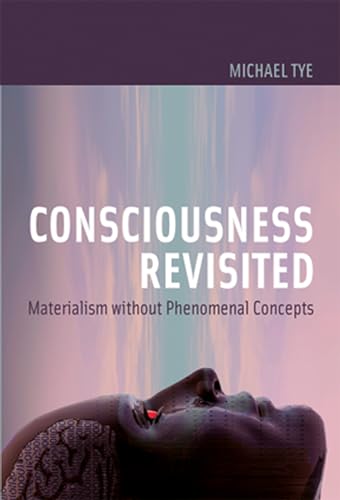


Consciousness Revisited: Materialism without Phenomenal Concepts (Representation and Mind series)
No reviews yet.
We are material beings in a material world, but we are also beings who have experiences and feelings. How can these subjective states be just a matter of matter? To defend materialism, philosophical materialists have formulated what is sometimes called "the phenomenal-concept strategy," which holds that we possess a range of special concepts for classifying the subjective aspects of our experiences. In Consciousness Revisited, the philosopher Michael Tye, until now a proponent of the the phenomenal-concept strategy, argues that the strategy is mistaken.
A rejection of phenomenal concepts leaves the materialist with the task of finding some other strategy for defending materialism. Tye points to four major puzzles of consciousness that arise: How is it possible for Mary, in the famous thought experiment, to make a discovery when she leaves her black-and-white room? In what does the explanatory gap consist and how can it be bridged? How can the hard problem of consciousness be solved? How are zombies possible? Tye presents solutions to these puzzles -- solutions that relieve the pressure on the materialist created by the failure of the phenomenal-concept strategy. In doing so, he discusses and makes new proposals on a wide range of issues, including the nature of perceptual content, the conditions necessary for consciousness of a given object, the proper understanding of change blindness, the nature of phenomenal character and our awareness of it, whether we have privileged access to our own experiences, and, if we do, in what such access consists.