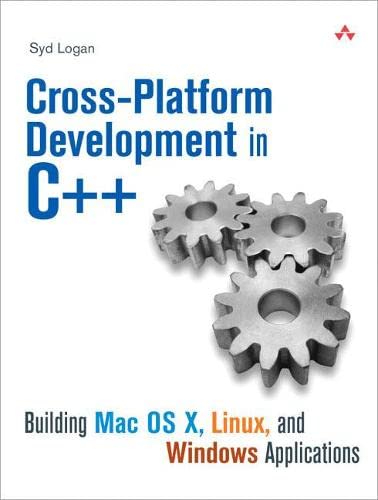


Cross-Platform Development in C++: Building Mac OS X, Linux, and Windows Applications
Book Details
Author(s)Syd Logan
PublisherAddison-Wesley Professional
ISBN / ASIN032124642X
ISBN-139780321246424
AvailabilityGewöhnlich versandfertig in 24 Stunden
Sales Rank712,292
MarketplaceGermany 🇩🇪
Description
Cross-Platform Development in C++ is the definitive guide to developing portable C/C++ application code that will run natively on Windows, Macintosh, and Linux/Unix platforms without compromising functionality, usability, or quality. Long-time Mozilla and Netscape developer Syd Logan systematically addresses all the technical and management challenges associated with software portability from planning and design through coding, testing, and deployment. Drawing on his extensive experience with cross-platform development, Logan thoroughly covers issues ranging from the use of native APIs to the latest strategies for portable GUI development. Along the way, he demonstrates how to achieve feature parity while avoiding the problems inherent to traditional cross-platform development approaches. This book will be an indispensable resource for every software professional and technical manager who is building new cross-platform software, porting existing C/C++ software, or planning software that may someday require cross-platform support. Build Cross-Platform Applications without Compromise Throughout the book, Logan illuminates his techniques with realistic scenarios and extensive, downloadable code examples, including a complete cross-platform GUI toolkit based on Mozilla's XUL that you can download, modify, and learn from. Coverage includes * Policies and procedures used by Netscape, enabling them to ship Web browsers to millions of users on Windows, Mac OS, and Linux * Delivering functionality and interfaces that are consistent on all platforms * Understanding key similarities and differences among leading platform-specific GUI APIs, including Win32/.N ET, Cocoa, and Gtk+ * Determining when and when not to use native IDEs and how to limit their impact on portability * Leveraging standards-based APIs, including POSIX and STL * Avoiding hidden portability pitfalls associated with floating point, char types, data serialization, and types in C++ * Utilizing platform abstract
More Books by Syd Logan

