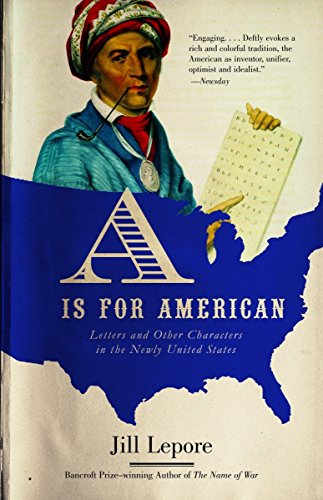


A Is for American: Letters and Other Characters in the Newly United States
Book Details
Author(s)
Lepore, Jill
Publisher
Vintage
ISBN / ASIN
0375704086
ISBN-13
9780375704086
Category
Paperback
Marketplace
France 🇫🇷
Description
Nativist, xenophobe, and anti-immigration pamphleteer, Samuel Morse was known in his day for more than the telegraphic code that bears his name--one of the many things we learn from the prizewinning historian Jill Lepore in this vivid study of language and linguistic politics in the early American republic. Morse "never gave up his hatred of immigrants," Lepore writes, but all the same nursed hopes that his dot-and-dash alphabet would somehow contribute to world peace. Just so, Noah Webster, of dictionary fame and also anti-immigration, sought to lay down rules for a language that would "build Americans' fragile sense of national belonging," while Thomas Hopkins Gallaudet sought to provide a language for the deaf, and Sequoyah a syllabary for the Cherokee people that would enable them to participate as citizens in the larger society. Language is power, these reformers and inventors knew. Lepore's highly readable study of language and its political uses in 18th and 19th century America gives us a new context in which to consider language-reform movements today as well as a window into the American past. --Gregory McNamee
Similar Products