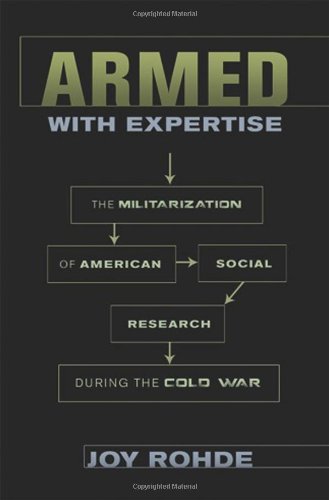


Armed with Expertise: The Militarization of American Social Research during the Cold War (American Institutions and Society)
Book Details
Description
During the height of the wars in Iraq and Afghanistan, the Pentagon launched a controversial counterinsurgency program called the Human Terrain System. The program embedded social scientists within military units to provide commanders with information about the cultures and grievances of local populations. Yet the controversy it inspired was not new. Decades earlier, similar national security concerns brought the Department of Defense and American social scientists together in the search for intellectual weapons that could combat the spread of communism during the Cold War. In Armed with Expertise, Joy Rohde traces the optimistic rise, anguished fall, and surprising rebirth of Cold War–era military-sponsored social research.
Seeking expert knowledge that would enable the United States to contain communism, the Pentagon turned to social scientists. Beginning in the 1950s, political scientists, social psychologists, and anthropologists optimistically applied their expertise to military problems, convinced that their work would enhance democracy around the world. As Rohde shows, by the late 1960s, a growing number of scholars and activists condemned Pentagon-funded social scientists as handmaidens of a technocratic warfare state and sought to eliminate military-sponsored research from American intellectual life.
But the Pentagon's social research projects had remarkable institutional momentum and intellectual flexibility. Instead of severing their ties to the military, the Pentagon’s experts relocated to a burgeoning network of private consulting agencies and for-profit research offices. Now shielded from public scrutiny, they continued to influence national security affairs. They also diversified their portfolios to include the study of domestic problems, including urban violence and racial conflict. In examining the controversies over Cold War social science, Rohde reveals the persistent militarization of American political and intellectual life, a phenomenon that continues to raise grave questions about the relationship between expert knowledge and American democracy.
