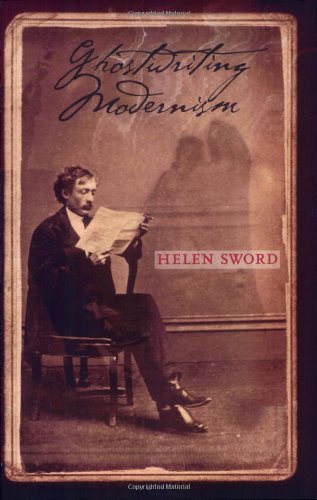


Ghostwriting Modernism
Book Details
Author(s)
Helen Sword
Publisher
Cornell University Press
ISBN / ASIN
0801487757
ISBN-13
9780801487750
Availability
Usually ships in 24 hours
Sales Rank
#1,682,928
Marketplace
United States 🇺🇸
Ratings & Reviews
No reviews yet — be the first!
No reviews yet.
Description
Spiritualism is often dismissed by literary critics and historians as merely a Victorian fad. Helen Sword demonstrates that it continued to flourish well into the twentieth century and seeks to explain why. Literary modernism, she maintains, is replete with ghosts and spirits. In Ghostwriting Modernism she explores spiritualism's striking persistence and what she calls "the vexed relationship between mediumistic discourse and modernist literary aesthetics."Sword begins with a brief historical review of popular spiritualism's roots in nineteenth-century literary culture. In subsequent chapters, she discusses the forms of mediumship most closely allied with writing, the forms of writing most closely allied with mediumship, and the thematic and aesthetic alliances between popular spiritualism and modernist literature. Finally, she accounts for the recent proliferation of a spiritualist-influenced vocabulary (ghostliness, hauntings, the uncanny) in the works of historians, sociologists, philosophers, and especially literary critics and theorists.Documenting the hitherto unexplored relationship between spiritualism and modern authors (some credulous, some skeptical), Sword offers compelling readings of works by James Joyce, T. S. Eliot, W. B. Yeats, H.D., James Merrill, Sylvia Plath, and Ted Hughes. Even as modernists mock spiritualism's ludicrous lingo and deride its metaphysical excesses, she finds, they are intrigued and attracted by its ontological shiftiness, its blurring of the traditional divide between high culture and low culture, and its self-serving tendency to favor form over content (medium, so to speak, over message). Like modernism itself, Sword asserts, spiritualism embraces rather than eschews paradox, providing an ideological space where conservative beliefs can coexist with radical, even iconoclastic, thought and action.

