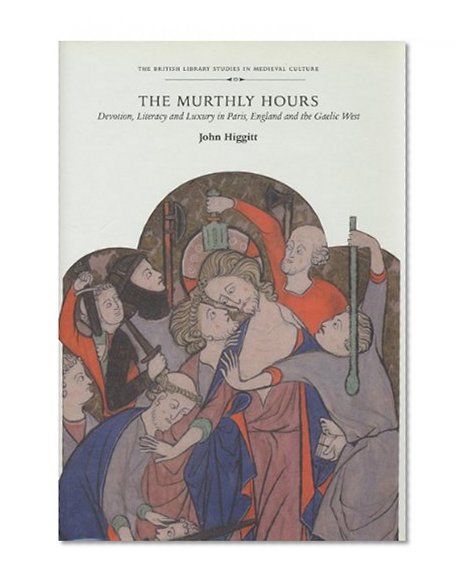


The Murthly Hours: Devotion, Literacy, and Luxury in Paris, England, and the Gaelic West (British Library Studies in Medieval Culture)
Book Details
Description
The Murthly Hours consists of two parts: a book of hours of the end of the thirteenth century preceded by twenty-three slightly earlier miniatures of Old and New Testament scenes surviving from another book, probably a psalter. It is therefore one of the earliest books of hours, written before the greater standardization of text and decoration during the fourteenth and fifteenth centuries. The book was a special commission and reflects the interests and devotions of its first owner, a lady apparently from the Worcester area whose portrait appears in one of the initials. The choice of feasts in the calendar and the choice of saints invoked in the litany reflects the owner's taste. They show how the book was used and can tell us something about secular devotions and literacy among the aristocracy in England and the West of Scotland in the later Middle Ages. The book also contains the second oldest surviving pieces of Gaelic which can be said with certainty to have been written in Scotland rather than in Ireland. They were written phonetically by someone not trained to write Gaelic and one piece has been identified as a form of charm.
John Higgitt recounts the provenance of this magnificent work of medieval art and its recent rediscovery and purchase by the National Library of Scotland. He discusses the writing, decoration, and style of illumination and the particular influence of the Paris school on the manuscript artists. The author presents the first interpretive study which will be of interest to historians of art, liturgy, and medieval literacy.
