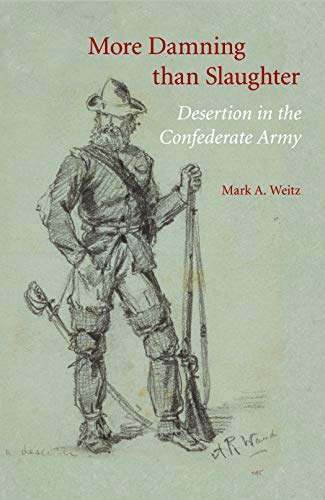
More Damning than Slaughter is the first broad study of desertion in the Confederate army. Incorporating extensive archival research with a synthesis of other secondary material, Mark A. Weitz confronts a question never fully addressed until now: did desertion hurt the Confederacy?
Coupled with problems such as speculation, food and clothing shortages, conscription, taxation, and a pervasive focus on the protection of local interests, desertion started as a military problem and spilled over into the civilian world. Fostered by a military culture that treated absenteeism leniently early in the war, desertion steadily increased and by 1863 reached epidemic proportions. A Union policy that permitted Confederate deserters to swear allegiance to the Union and then return home encouraged desertion. Equally important in persuading men to desert was the direct appeal from loved ones on the home front letters from wives begging soldiers to come home for harvests, births, and other events.
By 1864 deserter bands infested some portion of every Confederate state. Preying on the civilian population, many of these bands became irregular military units that frustrated virtually every effort to subdue them. Ultimately, desertion not only depleted the Confederate army but also threatened home and undermined civilian morale. By examining desertion, Weitz assesses how deteriorating southern civilian morale and growing unwillingness to contribute goods and services to the war led to defeat.