Buy on Amazon
https://www.ebooknetworking.net/books_detail-0804774897.html
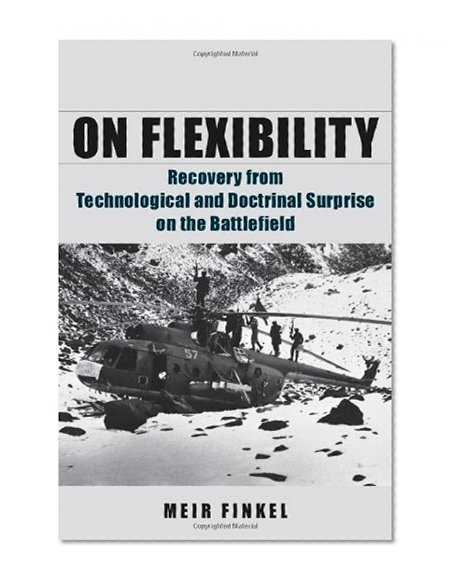
On Flexibility: Recovery from Technological and Doctrinal Surprise on the Battlefield
Book Details
Author(s)Meir Finkel
PublisherStanford Security Studies
ISBN / ASIN0804774897
ISBN-139780804774895
AvailabilityUsually ships in 24 hours
Sales Rank373,210
CategoryHistory
MarketplaceUnited States 🇺🇸
Description
This book addresses one of the basic questions in military studies: How can armies cope effectively with technological and doctrinal surprises—ones that leave them vulnerable to new weapons systems and/or combat doctrines?
Author Meir Finkel contends that the current paradigm—with its over-dependence on intelligence and an all-out effort to predict the nature of the future battlefield and the enemy's capabilities—generally doesn't work.
Based on historical case analysis of successful "under-fire" recovery and failure to recover, he identifies the variables that have determined these outcomes, and he presents an innovative method for military force planning that will enables armies to deal with the uncertainties of future wars "in real time."
His proposed method combines conceptual, doctrinal, cognitive, command, organizational, and technological elements to produce optimal battlefield flexibility and adaptability. He then demonstrates that, when properly applied, this method can eliminate most obstacles to overcoming battlefield surprises.

Author Meir Finkel contends that the current paradigm—with its over-dependence on intelligence and an all-out effort to predict the nature of the future battlefield and the enemy's capabilities—generally doesn't work.
Based on historical case analysis of successful "under-fire" recovery and failure to recover, he identifies the variables that have determined these outcomes, and he presents an innovative method for military force planning that will enables armies to deal with the uncertainties of future wars "in real time."
His proposed method combines conceptual, doctrinal, cognitive, command, organizational, and technological elements to produce optimal battlefield flexibility and adaptability. He then demonstrates that, when properly applied, this method can eliminate most obstacles to overcoming battlefield surprises.