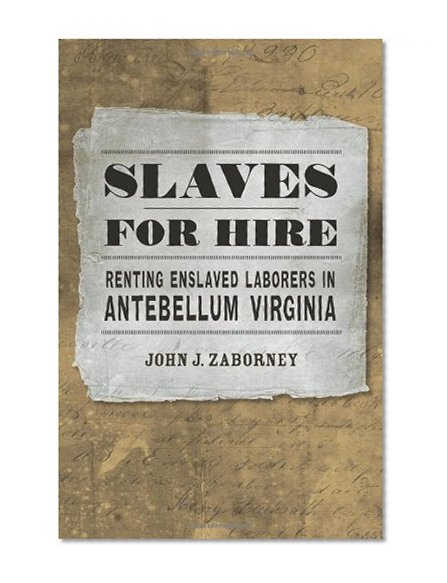


Slaves for Hire: Renting Enslaved Laborers in Antebellum Virginia
No reviews yet.
In Slaves for Hire, John J. Zaborney overturns long-standing beliefs about slave labor in the antebellum South. Previously, scholars viewed slave hiring as an aberration -- a modified form of slavery, involving primarily urban male slaves, that worked to the laborer's advantage and weakened slavery's institutional integrity. In the first in-depth examination of slave hiring in Virginia, Zaborney suggests that this endemic practice bolstered the institution of slavery in the decades leading up to the Civil War, all but assuring Virginia's secession from the Union to protect slavery.
Moving beyond previous analyses, Zaborney examines slave hiring in rural and agricultural settings, along with the renting of women, children, and elderly slaves. His research reveals that, like non-hired-out slaves, these other workers' experiences varied in accordance with sex, location, occupation, economic climate, and crop prices, as well as owners' and renters' convictions and financial circumstances. Hired slaves in Virginia faced a full range of oppression from nearly full autonomy to harsh exploitation.
Whites of all economic, occupational, gender, ethnic, and age groups, including slave owners and non-slave-owners, rented slaves regularly. Additionally, male owners and hirers often transported slaves to those who worked them, and acted as agents for white women who wished to hire out their slaves. Ultimately, widespread white mastery of hired slaves allowed owners with superfluous slaves to offer them for rent locally rather than selling them to the Lower South, establishing the practice as an integral feature of Virginia slavery.
