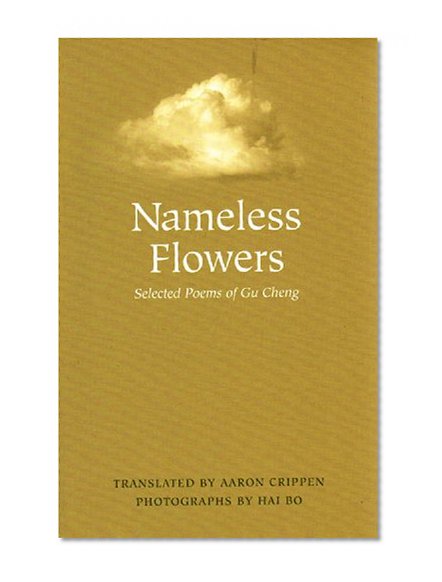


Nameless Flowers: Selected Poems of Gu Cheng
Book Details
Author(s)
Gu Cheng, Aaron Crippen, Hai Bo
Publisher
George Braziller Inc.
ISBN / ASIN
080761548X
ISBN-13
9780807615485
Availability
Usually ships in 24 hours
Sales Rank
#444,694
Marketplace
United States 🇺🇸
Description
Regarded as China's finest contemporary poet, Gu Cheng (1956-1993) has captivated readers worldwide.
While critics were calling him the harbinger of a troubled and new Obscure movement, the generation that came of age during the Cultural Revolution was taking his poems to heart. Nameless Flowers traces Gu Cheng's work from the lurid early lyrics that made him a literary star to the late expressions of dark beauty that predicted his second exile and tragic death. Though rooted in classical Chinese poetry, Gu Cheng's poems show traces of Western influences as diverse as Walt Whitman, Federico Garcia Lorca, and entomologist Jean Henri Fabre. His poems embrace animate and inanimate beings from the vast Chinese masses and Mongolian plains to minuscule insects and pebbles. It is this simultaneous vision of the little man and the faceless mass that has made Gu Cheng one of China's most fervently loved poets.Nameless Flowers includes memoirs by Gu Cheng and his father, writer Gu Gong, which vividly recount the poet's path out of rural exile to the Democracy Wall in Beijing and to the podiums of Berlin, London, and New York. Fans of writers such as Li Po, Basho, Hans Christian Andersen, Sylvia Plath, and Bei Dao, who was his friend, will readily recognize the powers of this eclectic and mystic poet.