We use cookies to run the site and, with your permission, to measure how it is used. You can accept all of them or deny the ones that are not needed. Read the cookie policy.
⭐ Ratings & Reviews
No reviews yet — be the first!
No reviews yet.
📖 Description
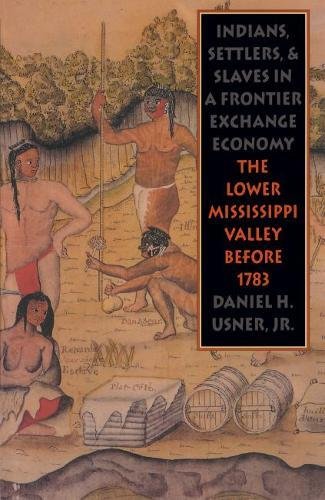
In this pioneering book Daniel Usner examines the economic and cultural interactions among the Indians, Europeans, and African slaves of colonial Louisiana, including the province of West Florida. Rather than focusing on a single cultural group or on a particular economic activity, this study traces the complex social linkages among Indian villages, colonial plantations, hunting camps, military outposts, and port towns across a large region of pre-cotton South.
Usner begins by providing a chronological overview of events from French settlement of the area in 1699 to Spanish acquisition of West Florida after the Revolution. He then shows how early confrontations and transactions shaped the formation of Louisiana into a distinct colonial region with a social system based on mutual needs of subsistence. Usner's focus on commerce allows him to illuminate the motives in the contest for empire among the French, English, and Spanish, as well as to trace the personal networks of communication and exchange that existed among the territory's inhabitants. By revealing the economic and social world of early Louisianians, he lays the groundwork for a better understanding of later Southern society.