EbookNetworking.net
AMP version Add a book
Lydia Cabrera and the Construction of an Afro-Cuban Cultural Identity (Envisioning Cuba) Buy Now 🇺🇸 Buy Now $18.27 USD www.amazon.com

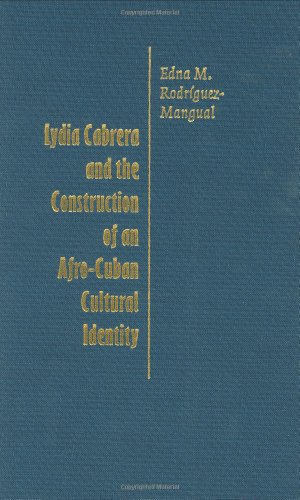
Lydia Cabrera and the Construction of an Afro-Cuban Cultural Identity (Envisioning Cuba)

Book Details
ISBN / ASIN 0807828874
ISBN-13 9780807828878
Availability Usually ships in 24 hours
Sales Rank #3,617,567
Marketplace United States
Ratings & Reviews No reviews yet — be the first!

No reviews yet.

Description
Lydia Cabrera (1900-1991), an upper-class white Cuban intellectual, spent many years traveling through Cuba collecting oral histories, stories, and music from Cubans of African descent. Her work is commonly viewed as an extension of the work of her famous brother-in-law, Cuban anthropologist Fernando Ortiz, who initiated the study of Afro-Cubans and the concept of transculturation. Here, Edna Rodriguez-Mangual challenges this perspective, proposing that Cabrera's work offers an alternative to the hegemonizing national myth of Cuba articulated by Ortiz and others.

Rodriguez-Mangual examines Cabrera's ethnographic essays and short stories in context. By blurring fact and fiction, anthropology and literature, Cabrera defied the scientific discourse used by other anthropologists. She wrote of Afro-Cubans not as objects but as subjects, and in her writings, whiteness, instead of blackness, is gazed upon as the "other." As Rodriguez-Mangual demonstrates, Cabrera rewrote the history of Cuba and its culture through imaginative means, calling into question the empirical basis of anthropology and placing Afro-Cuban contributions at the center of the literature that describes the Cuban nation and its national identity.

Donate to EbookNetworking

More of EbookNetworking

Book seriesVolume one to the last, in orderFree PDFs82,000+ papers, manuals and out-of-print scansBest dealsBargain copies under $5, six marketplacesReading clubsRead one book together, chapter by chapter
← Previous in Literary Criticism Being Ugly: Southern Women ... Next in Literary Criticism Ghazali and the Poetics of ... →
← Previous · Literary Crit… Being Ugly: South...
Next · Literary Crit… Ghazali and the P... →