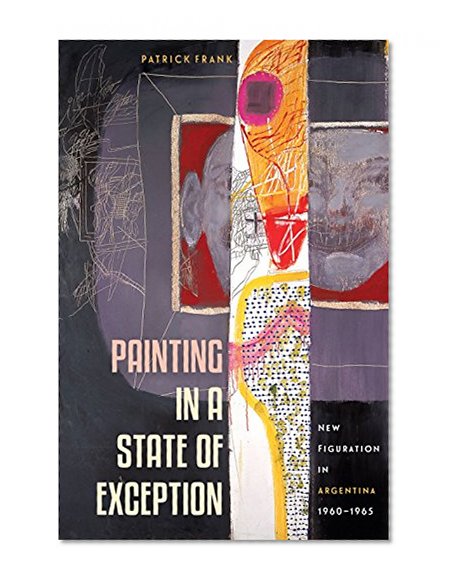


Painting in a State of Exception: New Figuration in Argentina, 1960-1965
"Chronicles an important and little-known episode in the history of Argentine art and thoughtfully locates the movement within the complex cultural and political landscape of its time."--Abigail McEwen, University of Maryland, College Park
Although it is one of Latin America s most significant postwar art movements, Nueva Figuraci n has long been overlooked in studies of modern art. In this first comprehensive examination of the movement, Patrick Frank explores the work of four artists at its heart--Jorge de la Vega, Luis Felipe No , R mulo Macci , and Ernesto Deira--to demonstrate the importance of their work in the transnational development of modern art.
The artists were responding directly to a difficult and chaotic period characterized by civil strife, frequent changes of government, and economic shocks. They broke new ground in Latin American art, not only in their technique, but also in the way they engaged the social, political, and cultural climate in an Argentina still recovering from the Per n years. Building on postwar expressionism by working with unprecedented urgency and abandon, they combined spontaneous techniques of abstraction with collage elements and figural subjects. Their works exercised a creative freedom that broke taboos about the role of the artist in society. Frank combines analyses of each artist s paintings with discussions of their social, political, and artistic contexts. He reveals the works connections to literature, popular culture, and film, broadening our understanding of modern art in the early 1960s.