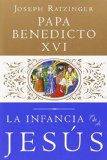
What did ancient Christians and pagans believe makes the unity of the nations? Just as he began serving as a major adviser at the Second Vatican Council in 1962, Joseph Ratzinger (the future Pope Benedict XVI) studied this question in lectures delivered at Austria's University of Salzburg. These lectures, originally published in German, are now made available in English in this volume.
According to Ratzinger, pagan Rome said the Empire was the "cosmopolis" which united the world. The church affirmed the goodness of the world, and acknowledged the proper role of the state. But Christian belief that Christ had given birth to the church, the eternal cosmopolis, present now, was revolutionary. Christ was the New Adam, who restores unity to a humanity scattered in the Fall and at Babel. For Origen, Israel was the true state that remained under the one God; other nations were under archons or dark angels, from which Christ came to liberate them. Christ instituted the eternal kingdom of peace, to which Christians belong now, living within and at the service of, their earthly nations. In Ratzinger's view, Origen thought peace between the church and world before the Eschaton - the eternal kingdom - was possible.
Augustine responded in two ways to claims by pagans that the Christian God had not protected Rome from being sacked in 410. First, Rome's pagan civic religion was undermined in its function of aiding state security by the fact that it was not true. Second, Christianity, as the truth, was not subordinate to the state, but was a new community. In Ratzinger's view, Augustine saw the church, the City of God, as an alien citizen, but one very much within the City of Man and meant to renew, not take over, that earthly city, until Christ's Second Coming.
This early work of Ratzinger's showcases the development of his theology, including themes that will inform his life's work, such as how God's transcendence and the doctrine of creation inform a Christian worldview, and the central role of the Incarnation in understanding how the church relates to the world.